Sanjay Aggarwal, CEO, Clover Organic, discusses the three layers of the “Clover Method” that have shaped the company’s approach and more
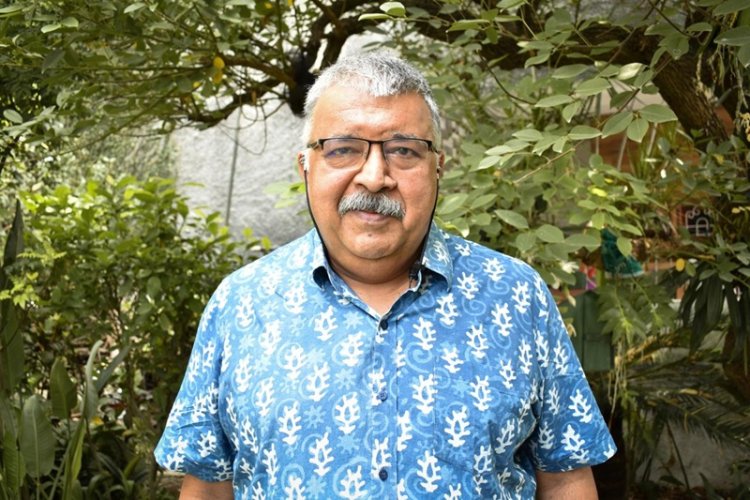
For Sanjay Aggarwal, farming was never meant to be a battle against nature. When he started Clover Organic, a company built on the simple belief that agriculture works best when one works best with natural systems and not against them. That idea went on to shape the company’s thinking for nearly two decades.
In an interview with ResponsibleUs, Aggarwal, CEO, Clover Organic, discusses the three layers of the “Clover Method” that have shaped the company’s approach. He says these layers are combined and adapted to suit specific regions and crop clusters, based on local geography and farming conditions. This forms the core of Clover Organic’s service offering.
Excerpts:
How has one simple idea—that farming must work in harmony with nature and not against it—shaped the company’s strategy over the years?
The second layer of the Clover Method is a set of well-known organic farming practices. These include composting, green manuring, mulching, crop rotation, mixed farming and related techniques that most farmers are already familiar with.
The third layer focuses on Indigenous Technical Knowledge (ITK)—local farming practices that have been passed down through generations. These methods have endured because they work. In the company’s view, farmers are the best scientists, constantly testing and refining techniques in real conditions. It is a matter of survival for them. They are the biggest stakeholders.
These three layers are combined and adapted to suit specific regions and crop clusters, based on local geography and farming conditions. This forms the core of Clover Organic’s service offering.
Alongside this, the company also works on product development. It runs a in-house R&D center at its facility in Dehradun, where new products are formulated based on farmers’ needs. All products are organic and certified, with the current range spanning 40 to 50 formulations used across agriculture, aquaculture and wastewater treatment. These products are used as tools to implement the ‘Clover Method’.
One example from the R&D work is a floating diya, for which a patent has already been filed. After being used for worship in a river or pond, the diya sinks and begins to clean the water body. The product has undergone extensive testing and has shown promising results. The company is now exploring partnerships to take this innovation further.
Since the methods and services you have described are closely linked to environmental outcomes and clearly help reduce carbon footprints, do you have any estimates or calculations on how much carbon could be saved by following these practices?
However, based on studies we have read and discussions we have had, roughly four tons of carbon can be sequestered in one acre of land in a year, approximately. Currently, we are working on more than one lakh acres, so you can imagine the amount of carbon that may have been sequestered.
We are also doing similar work in aquaculture, where greenhouse gases like methane are generated. Our methods help arrest the production of these gases in fishponds and similar systems.
In your earlier reflections, you mentioned that the farmer is a scientist and that nature already holds the answers—that microbes and ecology are the real tools for sustainability. How does this belief translate into everyday decision-making at Clover?
What we do at Clover is simply offer a small helping hand when nature is overwhelmed. Think of it like consumption: if someone is fed more than their body can process, problems arise. Similarly, when natural systems are overloaded, we step in to support nature so it can do what it does best.
This is where microbes come in. Microbes are nature’s soldiers. In a space as small as the palm of your hand, there are billions of them—bacteria, fungi, and other microorganisms. They do the work of decomposition and restoration. When organic waste disappears over time, it’s because microbes have broken it down.
We still understand less than five per cent of microbiology; the rest remains unknown. At Clover, we work with microbial formulations developed from strains sourced directly from nature. We have created multiple microbial combinations that work together—something that isn’t straightforward, because many microbes see others as competitors and destroy them. It took us years to develop methods that allow different microbes, including aerobic and anaerobic ones, to coexist and function effectively.
Today, we manufacture around 40 microbial products, along with mineral blends, that support soil health, water quality, and ecological balance. The products are our first pillar.
The second pillar is ecology, where we apply bio-mimicry—learning from nature’s own designs and processes. We use this approach in cleaning water bodies, among other applications. For example, in a pilot project with the National Institute of Hydrology, Roorkee, we treated flowing sewage in a drain without using a sewage treatment plant. By mimicking how a river cleans itself, we were able to reduce pollution levels by more than 50 per cent.
That, in essence, is our approach: not overriding nature, but enabling it to recover and rebalance itself.
So, we planted a lot of plants in the drain. We also used gravel and similar material so that filtration and sedimentation could happen. When you see water hitting stones or rocks, what happens? Aeration happens; foaming happens. And foaming is nothing but aeration. Aeration, in turn, increases the dissolved oxygen in the water. So, things like this are what we keep doing.
Are you working with any company or government body to clean rivers, drains, or similar water bodies?
At the moment, we are not working with any government. We are mainly working with the Private Sector on water conservation by making their existing ETPs and STPs more efficient.
If someone asks you to clean a certain volume of water, what would the cost look like? Just a rough idea.
As far as drains are concerned, every drain is very different — the level of pollution, the volume of sewage entering it, different points of pollution, dimensions of the drain, willingness of the community to clean it up etc. There are so many moving parts that, unless you do a thorough survey, it’s extremely difficult to estimate anything. In-situ bioremediation is the cheapest way to pollution flowing in drains. We do not have a choice but resort to innovative technologies to treat sewage owing to affordability and logistics.
The government is doing in-situ bioremediation projects, and many companies are treating sewage flowing in drains. But unfortunately, I haven’t seen a single one that is really successful.
Clover works closely with Farmer-Producer Organisations across several states. So, beyond certification and training, what kind of systematic changes have you seen in rural communities through this partnership?
If you can increase yield and quality while reducing the cost of production, the farmer’s income will naturally go up.
The change we are trying to bring, which is very important to highlight, is this: today, farmers are only focused on the rate—what price they will get. What they don’t look at is total profitability.
You could be getting a high rate, but if your cost of production is also high, it doesn’t really help. So, there is a bit of education that farmers need to go through, and that’s something we work on actively.
The second thing we do is build farmer collectives. We have built more than 150 FPOs and FPCs across the country, each with around 400 to 500 farmers.
We then introduce these FPOs directly to buyers. We don’t buy from them ourselves. The reason is simple—if we started buying, we would become middlemen, and we don’t want that.
Companies like ITC, Zomato, and several others buy directly from these FPOs. That benefits the buyers and it benefits the farmers. This is how we help improve farmer incomes.
It is also to be noted that setting up these Farmer Collectives is like setting up rural Startups. The idea maybe very good, but one also needs to prepare for failures. One cannot expect 100% FPOs functioning well. One needs to learn from these failures in order to make better decisions in the future.
Organic farming is often seen as niche or premium. How do you make it viable for smallholders operating in resource-constrained environments?
The first part is what I already explained through CRY.
The second part is about how we engage with buyers. Today, there are many labels—organic, regenerative, and so on. The word “organic” itself has become very confusing and abused.
So, for lack of a better term, I call it “safe food”. Safe food should be available to the masses. Why can’t it be mainstream? Why can’t a taxi driver afford to eat organic food?
We are working with a few organisations to reduce costs at the production level, and at the same time, to positively influence the certification process—so that it becomes economical, simple, transparent, and trustworthy for consumers.
Imagine this: conventionally grown rice is selling at ₹50, and safe rice is available at ₹55. I’m just giving an example. People will choose the ₹55 option, without a doubt. But if you take that ₹55 and turn it into ₹200, like some imported or premium brands, it won’t work. It will remain niche. Correct?
And that is exactly what I want to break. This idea of organic being a niche is something we’ve inherited from European markets, and I don’t want that model for my Country.
Certification itself isn’t the issue; understanding the process is what matters. Awareness is the real gap that is acting as a stumbling block for organic certification. Is there an organisation responsible for implementing NPOP in India, along with NOP? Is it as simple as explained?
The problem with anything digital or app-based is connectivity. In many rural areas, mobile connectivity is weak or non-existent. So how do farmers or field teams work on that software? That was one major issue.
The second problem came with the introduction of new terms and conditions in what you could call NPOP version two. These created serious difficulties. For instance, requirements like having a warehouse or skilled Labour with specific qualifications.
A lot of this was simply not practical on the ground. After multiple discussions and meetings, they realized this. Many of those conditions have now been rolled back, and they are trying to come up with a more workable system. I am sure APEDA will come up with an excellent system shortly.
Earlier, in group certification under ICS, if you had, say, 500 farmers, the system would select the square root of that number for audit. The selection was done by TraceNet itself, not by the certification body. That was actually a good system, because it avoided bias. The auditor couldn’t choose which farmer to audit.
But now, what they are proposing is 100 per cent verification—not just a sample based on square root. And that, again, brings its own challenges.
What kind of feedback do you receive from fish farmers who switch to Clover’s organic inputs? And how do you deal with skepticism or hesitation when farmers are unsure or doubtful?
This applies across the board—whether it is aquaculture or agriculture. It always takes time.
As you explained, you don’t work directly as a buyer with FPOs and farmers but act more as an aggregator and market connector for organic produce. What are the biggest challenges you face when moving from growing organic crops to selling them at fair prices?
Then comes packing and grading, which is another challenge. Supply chains and transportation are also major issues, especially in the Northeast. In many areas, roads are almost non-existent. Because of all this, nearly 30 per cent of the crop gets wasted.
There is also a mindset challenge. Suppose we have secured a buyer who is ready to buy a large quantity—say 500 tonnes—at ₹20 per kilo. If another buyer comes along and offers ₹25 but only for 100 kilos, farmers sometimes push for that higher price instead. They tend to focus on short-term gains rather than long-term partnerships and managing this can be difficult.
Then, of course, there are middlemen. As you know, they take away a large share of the profits. For example, rice that sells at ₹100—less than ₹40 reaches the farmer. The rest is taken up by the system. The justification given is that logistics are expensive, but the farmer bears the loss.
Is there any crop where you struggled to find a market and had to help farmers innovate or reposition it?
They are supplying to multiple cities now, and even local consumption has increased because of aggressive awareness campaigns. That has been a real sense of achievement for us.
We brought in simple innovations. We helped and supported the CEO and farmers of the FPOs by setting up ‘Pineapple Bonanza’. We helped purchase 5 tons of pineapples at a time. There was heavy marketing activity that preceded the event. Volunteers also stepped in. All we did was sold pineapple slices and pineapple juice to people of Mizoram. Once the consumers realised the delicious taste of their own Pineapples, demand soured and the FPOs benefited tremendously.
Do you see competition in the market?
How do you position yourself in what can feel like a crowded market?
We also focus heavily on educating our clients and customers as we expand. Each vertical we work in has a different audience and requires a different approach, and we tailor our engagement accordingly.
What's Your Reaction?