Flexible Solar Cell Hits 26.4% Efficiency, Paving Way for Wearables & Drones
Scientists at the Solar Energy Research Institute of Singapore (SERIS) have developed the world’s most efficient flexible solar cell, reaching 26.4% efficiency using a perovskite-organic tandem design. This innovation enhances solar energy conversion for use in drones, wearables, and smart textiles. It supports lightweight, flexible integration and offers potential for large-scale production, marking a significant leap in sustainable tech solutions.
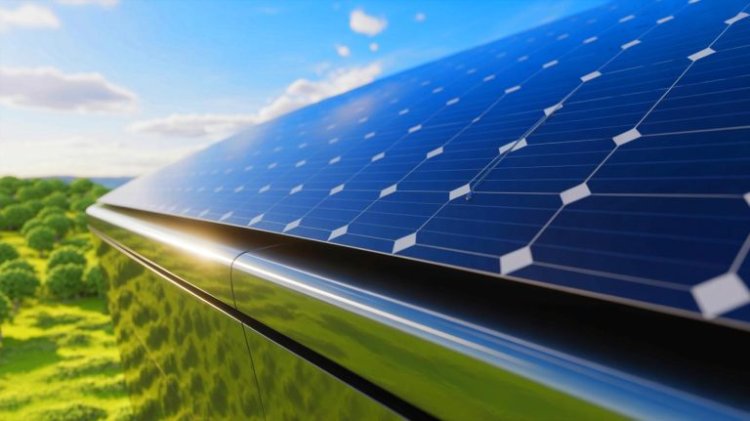
A solar technology advancement has been achieved by Singapore's Solar Energy Research Institute (SERIS), with scientists producing the world's top-performing flexible solar cell at a record 26.4% efficiency. The innovation has the power to reverse the trajectory of light-weight, portable, high-performance energy solutions into the future.
The solar cell is tunable and utilizes a perovskite-organic semiconductor tandem structure for enhanced harvesting of the entire spectrum of sunlight. Top layer of visible light-absorbing material is fabricated from perovskite material, and the novel organic molecule P2EH-1V making up the bottom layer harvests the NIR light very effectively. The approach overcomes one of the inherent drawbacks of conventional solar technologies—inefficient NIR light harvesting—and achieves a maximum in overall energy conversion efficiency.
The record was confirmed by expert measurements and facilitated by device-physics and spectroscopic characterisation. The new cell surpasses previous models, e.g., perovskite-organic and perovskite-CIGS tandem cells and single-junction perovskite cells of comparable area. With further refinement, the scientists see the tandem cells reaching efficiencies of over 30% in the future.
Apart from the fact that they are highly efficient, the new solar cell is also thin and flexible and hence can be applied on rough and curvaceous surfaces. The technology is hence highly appropriate for numerous practical applications like in light-weight drones, wearable electronics, smart clothing, and health patches. Compared to stiff solar panels, the flexible sheets are and can be produced through roll-to-roll fabrication methods, which facilitate cheap and scalable manufacturing.
The research group at SERIS is now developing the higher stability and lifespan of such cells in real conditions. Operating stability refers to the ability of the cells to run faultlessly while under normal use, especially those undergoing alternate weather or mechanical stress. Pilot-scale production is also being developed for the purpose of investigating large-scale production and marketability.
This technology is particularly suitable for industries that want to reduce their environmental footprint while not compromising on superior performance. There are a number of industries like consumer electronics, aerospace, and medicine that require light power sources, and the ability to integrate efficient solar technology into product surfaces has the prospect of substituting or eliminating the use of conventional batteries.
As the path to mass production and application to markets continues through continuous testing and development, the breakthrough opens a new norm to flexible solar cells and creates an entry to next-generation hybrid power systems. SERIS's research is one important step toward better, lighter, and renewable power systems that will be developed to meet the demands of today's technology.
Source & Credits
This report is based on evidence provided by the Solar Energy Research Institute of Singapore (SERIS). By Noah Bennett, published June 30, 2025.
What's Your Reaction?