The future of manufacturing will not be defined solely by what organisations produce, but by how responsibly they create value for society, the economy, and the planet.
As the world observes World Environment Day, sustainability has moved far beyond the realm of environmental commitments and corporate reporting. Today, it sits at the heart of business strategy, influencing how organisations innovate, allocate resources, manage risks, and create long-term value.
For decades, manufacturing excellence was measured through productivity, scale, and cost efficiency. While these remain important indicators of business performance, the definition of success is rapidly evolving. Businesses are now being assessed not only on what they produce, but also on how they produce it. Increasingly, investors, customers, regulators, and communities expect organisations to demonstrate environmental responsibility alongside financial performance.
This shift reflects a larger reality. The world is facing growing environmental and resource-related challenges, from climate change and energy security concerns to rising material costs and increasing pressure on natural ecosystems. As these challenges intensify, organisations are recognising that sustainability is no longer a peripheral concern. It is a business imperative that directly impacts resilience, competitiveness, and future growth.
Responsible Manufacturing as a Core Pillar
In this context, responsible manufacturing has emerged as one of the most critical pillars of sustainable development. At its core, responsible manufacturing is about creating products and delivering value while minimising environmental impact across the entire lifecycle. It requires organisations to move beyond short-term efficiency gains and embrace a broader perspective that considers resource consumption, energy usage, waste generation, emissions, and long-term environmental stewardship.
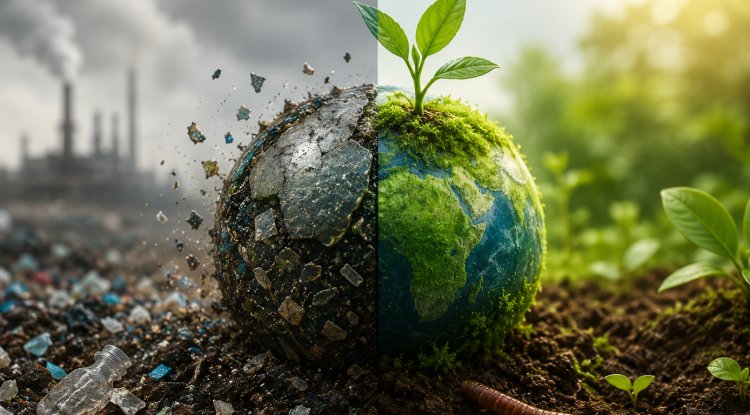
One of the most significant changes taking place today is the transition from linear production models towards circular thinking. For decades, industrial growth largely followed a "take, make, use, and dispose" approach. While this model enabled rapid economic expansion, it also contributed to resource depletion and environmental stress.
The future demands a different approach, one that prioritises resource optimisation, product longevity, reuse, recycling, and responsible consumption. Businesses are increasingly recognising that materials, energy, and natural resources must be managed more efficiently if growth is to remain sustainable in the long term.
Technology Enables Both Sustainability and Performance
At the same time, technology is playing a transformative role in helping organisations achieve these goals. Advances in automation, digitalisation, data analytics, and intelligent monitoring systems are enabling manufacturers to optimise operations with unprecedented precision. Businesses can now identify inefficiencies, reduce energy consumption, minimise waste, and improve resource utilisation across production environments.
Importantly, resource-efficient technologies are demonstrating that sustainability and business performance are not competing priorities. In many cases, they reinforce one another. Reduced material waste, lower energy consumption, streamlined operations, and smarter resource allocation often translate into improved productivity and stronger financial outcomes. Sustainability is increasingly becoming a driver of operational excellence rather than a constraint on growth.
Renewable Energy and Innovation Across the Value Chain
Renewable energy adoption is another area where significant progress is being made. Around the world, manufacturers are accelerating efforts to reduce their dependence on conventional energy sources and transition towards cleaner alternatives. What was once considered an ambitious environmental goal is steadily becoming a strategic necessity. Beyond reducing carbon emissions, renewable energy investments help strengthen energy resilience, improve long-term cost predictability, and support broader decarbonisation efforts.
Yet sustainability cannot be achieved through operational improvements alone. It requires innovation at every stage of the value chain. Product design, sourcing strategies, manufacturing processes, logistics networks, and end-of-life recovery systems all play a role in determining environmental impact. Organisations that integrate sustainability into decision-making from the earliest stages are often better positioned to create meaningful and lasting change.
Collaboration and Trust
Equally important is collaboration. No single organisation can solve global environmental challenges in isolation. Achieving meaningful progress will require cooperation across industries, supply chains, governments, technology providers, and communities. Businesses must work together to share knowledge, accelerate innovation, and develop scalable solutions that balance economic growth with environmental responsibility.
As sustainability expectations continue to evolve, organisations are also discovering that responsible manufacturing contributes to stronger stakeholder trust. Customers increasingly prefer businesses that demonstrate genuine environmental commitment. Investors are paying closer attention to environmental performance and climate-related risks. Employees, particularly younger generations, are seeking employers whose values align with their own aspirations for a more sustainable future.
The Future Belongs to Those Who Act Now
These shifts are reshaping the competitive landscape. The organisations that will thrive in the years ahead are likely to be those that view sustainability not as an obligation, but as an opportunity to innovate, differentiate, and create long-term value. Responsible manufacturing is no longer simply about reducing environmental impact; it is about building future-ready businesses capable of succeeding in a rapidly changing world.
World Environment Day serves as an important reminder that economic progress and environmental stewardship must advance together. The path towards a more sustainable future will require bold thinking, continued innovation, and collective action. By embracing responsible manufacturing and investing in resource-efficient technologies, businesses can play a meaningful role in addressing global challenges while unlocking new growth opportunities.
Ultimately, the future of manufacturing will not be defined solely by what organisations produce, but by how responsibly they create value for society, the economy, and the planet.
Views are personal
What's Your Reaction?