“Vrindavan is a very special place… Krishna was present here,” he explains. Unlike the urban centres of Dwarka or Hastinapur, Vrindavan was a rural, forested hamlet.
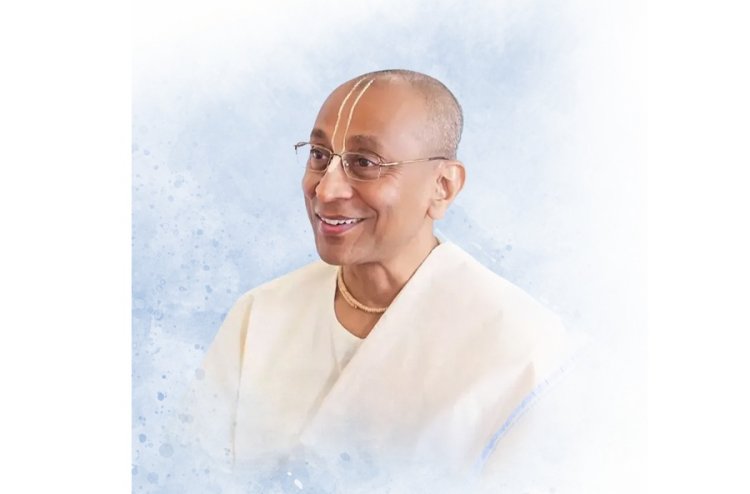
For Sri Chanchalapati Dasa, the Vrindavan Heritage Tower is more than just a physical structure — it’s a living tribute to the land Krishna loved most and a deeply conscious effort to restore the ecological and cultural balance of Vrindavan.
“Vrindavan is a very special place… Krishna was present here,” he explains. Unlike the urban centres of Dwarka or Hastinapur, Vrindavan was a rural, forested hamlet. “It was simple, unexploited, very contented, very happy life,” he says. This became the foundation of the project’s vision: a modern structure built with ancient values, harmonising urban needs with ecological sensitivity.
“He Cries for Vrindavan” - Recalling a touching episode from the scriptures, Chanchalapati Dasa shares how Krishna’s queens once approached Rohini Mata, asking about Krishna’s time in Vrindavan. Despite being surrounded by palaces and attendants in Dwarka, Krishna would sometimes wake in the night and call out, “Nanda Maharaj, Yashoda Mai… Sridhar, Madhumangal… Radha,” and cry inconsolably. “We try to console him, but we cannot,” the queens said. That longing, Dasa says, reveals the unmatched spiritual essence of Vrindavan.
A Zero-waste, Eco-conscious Design
This reverence translates directly into the project's sustainability practices. “We are still plugging in all the different aspects,” he says, describing Phase 1 of the development. Rainwater harvesting, for instance, has been planned with precision. “We have done the contour survey… all the water that collects runs into one Sarovar. It goes down and enriches the aquifers and groundwater.”
Water is also treated in an STP (Sewage Treatment Plant) and reused to maintain the gardens. “We are not 100% successful… but we are improving, and the intention and the roadmap is towards that.”
The groundwater in Vrindavan is very salty, he explains, and long-term, disciplined rainwater harvesting could transform its quality over the next 5 to 10 years, benefiting the entire local community.
Sacred Forests, Solar Power And Biogas
Flanking the lawns are forest ecosystems inspired by the 12 sacred forests mentioned in the scriptures. “We are recreating them — Talvan, Bhandiravan, Kumudvan — each forest with its unique trees and flora,” he says. “Birds, peacocks… they find that there is a small pocket for them which is not disturbed by too many human beings.”
Energy too is being approached with sustainability in mind. “We have solar panels… and an Akshaya Patra kitchen where we are trying to bring more green features.” Biogas is also in use. “We have a Goshala… and we want to reuse the biogas and the bio-waste.”
Even flower waste from the temple is being reused. “We also have a plan to aggregate flower waste from all the temples in Vrindavan,” he shares. “Vermicompost and a few other things… some very special herbs and flowers which are lost, we are trying to bring them back.”
A Multi-use Complex Rooted In Sustainability
The tower is only one part of a larger multi-use complex. “There is a heritage tower, a theme park that tells about Krishna’s heritage, a viewing gallery, event halls, and residences and accommodation for people to stay for a few nights.”
Despite the intensity of activity, the aim is clear: “We want to carefully design that we are sensitive to environment and ecology and how to make it sustainable.”
Community Engagement: Akshaya Patra And Beyond
Community connection is at the heart of this mission. “Our coming to Vrindavan was with a community engagement initiative — Akshaya Patra,” Dasa says. “We started with a small kitchen feeding 500 to 600 children… today we are feeding 1.2 lakh children every day in Mathura district.”
The programme operates in government schools, often serving the poorest families. “Education is transformative,” he says. “It can take the entire family out of the cycle of poverty… education catalyses and enables them.”
Across India, Akshaya Patra now feeds 22 lakh children in 78 locations, employing around 9,500 people, most of whom are blue-collar workers — drivers, cooks, cleaners. “We care for our employees… and provide scholarships to their children if they are doing well.”
He recounts a visit to a village in Mathura while scouting land for a new kitchen. “We asked the villagers, if an Akshaya Patra kitchen is set up here, will you be happy? They became very bright and said, ‘We will be very happy!’
What's Your Reaction?