A Curtin University-led study reveals that Turkey's Tuz Gölü Fault is pulling apart at a measurable rate, confirming its role as an extensional fault and offering new insights into tectonic plate movement and seismic risk in Central Anatolia.
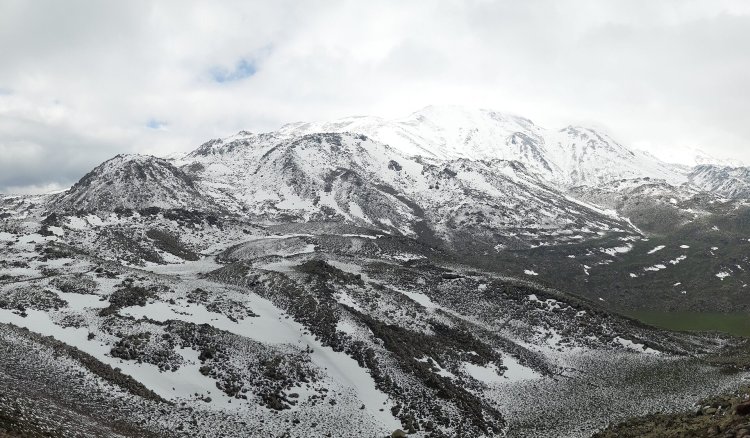
New geology research has verified that Turkey's Tuz Gölü Fault Zone is an extensional fault, gradually pulling apart instead of sliding horizontally, as had been presumed. The research, undertaken by Curtin University in partnership with international partners, employed sophisticated dating and imaging methods to examine lava flows from the Hasandağ volcano that had been deformed by tectonic activity. These flows cooled and solidified prior to being torn apart by displacements along the fault plane. By reconstructing the initial position of the lava flows, researchers determined the movement of the fault and found the land is splitting apart at an average rate of roughly one millimetre a year.
Stretching over 200 kilometers in width and visible from space, the Tuz Gölü Fault Zone is central to the tectonic evolution of Central Anatolia. Situated at the triple plate junction between the Eurasian, Arabian, and African plates, it is the perfect location to witness continental deformation due to plate collision. Compared to more active strike-slip faults further north and northeast in Turkey, this fault zone is distinguished by slower, extensional motion. This distinction has significant implications for evaluating long-term seismic and volcanic hazard in the region and offers useful information to global tectonic models.
The researchers employed remote sensing, helium dating, and ion microprobe analysis at Curtin University's John de Laeter Centre and Western Australia ThermoChronology Hub to accurately date the lava deposits and track their displacement. Zircon crystals in the volcanic lava served as clocks in the rocks, enabling scientists to calculate the eruption time and fault-induced post-eruption movement. The information gave a time sequence of the tectonic activity and enabled a precise reconstruction of how the geology of the area has evolved over a thousand years.
This new realization of the Tuz Gölü Fault contradicts past findings that listed it as a strike-slip fault, whereby the tectonic plates translate horizontally over each other. Instead, the fault is actually located to accommodate east-west extension across Central Anatolia, providing new information regarding crustal behavior within collisional regimes. This comes particularly important where there is parallel geological setting in the Alpine-Himalayan mountain belt.
The study also shows the limitations of using only recent seismic data to evaluate geological hazards. Because the Tuz Gölü Fault is not highly active in the short term, its long-term tectonic activity would go unnoticed without extensive geological investigation. Through the integration of field data with satellite imagery and laboratory investigation, the study provides a wider perspective of the tectonic evolution of the region.
Carried out with the support of Turkey's Konya Technical University, Germany's Heidelberg University, and Canada's University of Toronto, the research highlights the importance of global cooperation in solving complex geology issues. The research not only increases the knowledge about Turkey's geological structure but also acts as a point of reference for international studies on continental crust behavior under tectonic stress.
The complete research article, "Pure dip-slip along the Tuz Gölü Fault Zone accommodates east-west extension of Central Anatolia," was published in Communications Earth & Environment. It provides a framework for the interpretation of similar geologic structures in other continental deformation zones. As tectonic forces continue to shape the Earth's surface, research like this adds to the body of knowledge needed to predict long-term geological change and evaluate related hazards.
Source/Credits:
Research by Curtin University, in collaboration with Konya Technical University (Turkey), Heidelberg University (Germany), and University of Toronto (Canada)
Published in Communications Earth & Environment
DOI: https://doi.org/10.1038/s43247-025-02192-6
Image Credit: Hasandağ volcano, Lucien Wilkinson
What's Your Reaction?