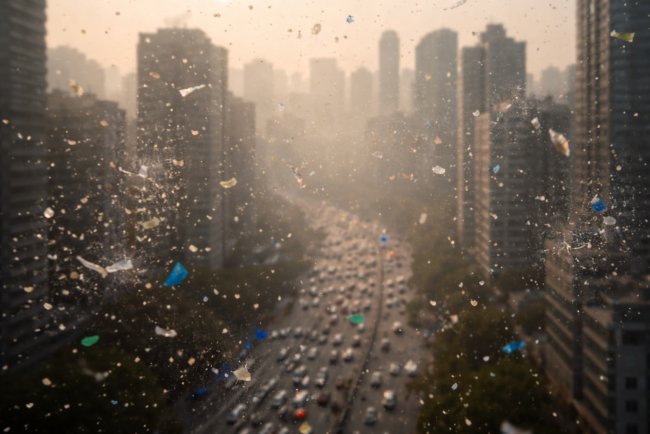
Scientists have found methane escaping from beneath Greenland’s ice, warning that rapid Arctic warming could release long-trapped greenhouse gases and intensify climate change.

Scientists studying Greenland’s ice sheet have discovered methane gas escaping from beneath thick layers of ice, revealing another possible danger linked to global warming.
According to research conducted by scientists from the University of Oulu and published in Nature Geoscience, the ice cover in Greenland is far more vulnerable to changes in climate than had been known earlier. In addition, it is feared that the melting ice cover in the Arctic region will release hidden greenhouse gases that have been buried underground for centuries.
Methane is one of the most powerful greenhouse gases. Although methane might be present in the atmosphere for a shorter period than carbon dioxide, methane is capable of trapping much more heat.
Scientists discovered evidence that during past warming phases, Greenland’s glaciers melted much more that they receded further into land than previously thought. The ice did not just shrink slightly but large sections of glaciers moved far back inland because of rising temperatures.
It is important because the methane gas was not caused by any industrialisation or human activities. It was naturally buried under the ice for many thousands of years. However, as temperatures increase quickly in the Arctic region, experts predict that there might be other deposits of methane gases beneath the ice.
The Arctic region is heating up almost four times quicker than the global average. Greenland, which is part of the Arctic region, loses billions of tons of ice every year. The melting glaciers cause sea levels to increase, endangering coastal areas around the world.
As per scientists, further warming could cause faster retreat of ice in Greenland, revealing more sub-surface matter that releases methane gas into the air. This would further exacerbate the challenge of reducing global warming in the future.
The research also aids scientists in understanding the reaction of our planet to climatic changes of the past. Through sediment samples and gases trapped under the Greenland Ice sheet, scientists can gauge how responsive the Arctic might be to future warming.
Experts say that the findings are another warning that climate change is affecting systems hidden deep beneath the Earth’s surface not just what we can immediately see. The Arctic is no longer changing slowly. In many regions, transformations are already happening faster than climate models predicted.
While researchers say there is no immediate methane “explosion” risk, the study highlights why reducing global emissions quickly remains critical. Once these natural processes intensify, reversing their impact could become far more difficult.
What's Your Reaction?