India Achieves 50% Non-Fossil Power Capacity, Beats 2030 Target
India reaches 50% of its installed electricity capacity from non-fossil sources five years ahead of its 2030 target under the Paris Agreement, marking a major milestone in its clean energy journey and global climate leadership.
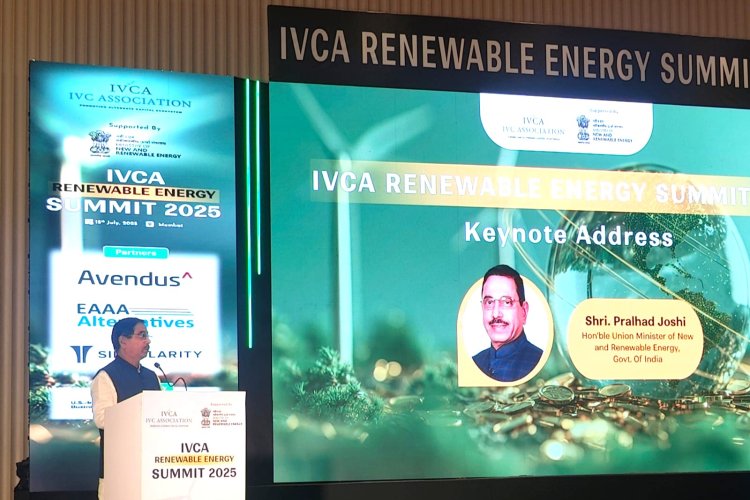
India has crossed a significant clean energy benchmark by achieving 50.08% of its overall installed electricity generation capacity from non-fossil fuels five years ahead of its 2030 deadline under the Paris Agreement. Non-fossil sources like renewables, big hydro, and nuclear comprise 242.78 gigawatts (GW) of the nation's 484.82 GW overall installed capacity as of June 30, 2025.
Thermal power — which is largely coal-powered — ranks second with 242.04 GW, or 49.92%, based on statistics presented by the Ministry of New and Renewable Energy (MNRE), with nuclear adding 8.78 GW, major hydro adding 49.38 GW, and other forms of renewable energy except hydro adding 184.62 GW.
This achievement is a significant leap in India's energy transformation, a magnificent leap in its climate ambition with a demonstration of leadership of developing nations. India's contribution of non-fossil fuel is now among the only G20 nations that are aligned to achieve or even surpass its Nationally Determined Contributions (NDCs).
Faster pickups are also the result of initiatives from the government like the solar irrigation and rooftop solar scheme PM Surya Ghar: Muft Bijli Yojana for one crore households. Solar parks on a large scale, hybrid wind-solar tenders, and other bioenergy projects have also helped in cleaner energy access improvement in rural and urban India.
Other states like Tamil Nadu and Gujarat have made considerable headway, especially in wind power, that has facilitated evening peak demand management. Bioenergy, which was previously of negligible size in the energy mix in India, now assists in rural income and power diversification.
Government accounts have stated this shift is not only less carbon emissions. It is also creating employment opportunities, expanding electricity access, and reducing air pollution. MNRE has stated the shift towards clean energy is leading to "energy justice" with the distribution of sustainable electricity among vulnerable communities.
India's initial victory augments its position at international platforms such as the G20 and UN Climate Change Conferences, where it promotes climate justice, sustainable living, and balanced access to clean technology. The success will support India's role as a climate champion for Global South nations.
With such speed, India is now turning its attention towards the creation of digital as well as physical infrastructure to enable the intermittency of the renewable sources. Future plans involve the setting up of large-scale battery storage plants, pumped hydro schemes, and artificial intelligence-based energy forecasting networks. All these technologies will stabilize the grid and enable more flexible integration of the renewables into the power system.
The MNRE stressed the requirement for artificial intelligence to forecast demand, guide the intelligent distribution of energy, and suggest the "prosumers"—customers that produce power themselves through solar on rooftops or other means. The ministry also discussed the increasing role of cybersecurity to handle the digital network of energy.
Even with this remarkable milestone, India continues its goal of reaching 500 GW of non-fossil capacity by 2030 and net-zero carbon emissions by 2070. Officials added further that the trend now is a positive indication of being on the good track to achieve both goals.
Installed capacity as of 30 June 2025 is:
Thermal (coal-based): 242.04 GW (49.92%)
Nuclear: 8.78 GW (1.81%)
Large Hydro: 49.38 GW (10.19%)
Renewables (excluding large hydro): 184.62 GW (38.08%)
Total Non-Fossil: 242.78 GW (50.08%)
Total Installed Capacity: 484.82 GW
This accomplishment aligns with growing global interest in decarbonisation and energy resilience. India's success provides an example for other emerging economies that want to shift away from fossil fuels without necessarily compromising on growth and development.
India's per capita emissions are still one of the lowest among the G20, and this underpins its case for a level and more equitable global response to climate change that is sensitive to historical emissions and promotes sustainable development in the Global South.
In spite of setbacks, especially in transmission infrastructure and localized storage, India's visionary policy direction, public-private collaborations, and declines in the cost of renewable energy technologies continue to guide its way forward.
With foreign support and policy backing on its side, India must continue to be one of the major forces behind global changes in energy, both domestically and as a beneficiary of South-South cooperation.
Source & Credits: Press Information Bureau. Image credit: X@JoshiPralhad
What's Your Reaction?