India highlighted the importance of blending modern science with traditional knowledge to promote sustainability and strengthen climate resilience.
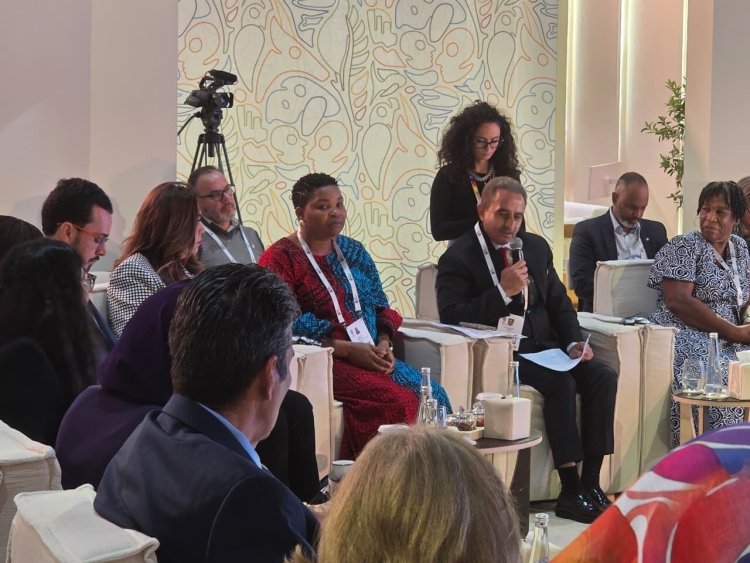
Union Minister of State for Environment, Forest and Climate Change Kirti Vardhan Singh led India’s intervention at the High-Level Roundtable Dialogue with IUCN President Razan Khalifa Al Mubarak during the IUCN World Conservation Congress in Abu Dhabi. The session, themed “Nature’s Promise for Climate and People: A Call and Commitment from the Conservation Community to Belem and Beyond,” focused on aligning scientific and traditional approaches to address the climate crisis.
The Minister emphasized that conserving natural resources and living in harmony with nature are deeply rooted in Indian culture and traditions. At the heart of these traditions lies adaptability to local conditions and a profound cultural connection with the natural world. “While modern science uses terms like sustainability and climate change, India has long embodied these principles through practical, nature-aligned living,” he said.
Informing the gathering how India has built upon this ancestral wisdom and integrated it with scientific approaches for a resilient future, the Minister stated that the ‘Mission LiFE’ launched by Prime Minister Narendra Modi is a people-led global movement transforming timeless wisdom into action to address the urgent challenges of climate change and environmental degradation. PM’s LiFE Vision revolves around encouraging environmentally conscious behaviour, rooted in India’s traditional ethos and knowledge. The Indian model of environmental conservation advocates a policy framework that is evidence-based, equity-driven, and culturally rooted, he said.
Explaining the concept further, the Minister stated that India’s ethos believes that science and traditional knowledge are complementary and not competing. Hence, there is great scope for collaboration in this area, where science meets culture and tradition meets innovation. India is working to document, validate, and integrate these indigenous practices into formal systems of climate adaptation and biodiversity conservation, he informed. In his address, the Minister gave examples of traditional expertise such as the Toda tribes of Nilgiris predicting monsoons by observing the nest-building behaviour of ants or the Jarawas of Andaman predicting cyclones based on the movement of fishes to shallow waters. He also talked about sustainable water conservation practices in Rajasthan like step wells and ‘Silver Drops of Rajasthan’.
The Minister concluded his intervention by observing that these efforts reflect India’s vision where science amplifies tradition, and tradition integrates with science. As IUCN continues to advance nature-based solutions, the task ahead is to deepen this dialogue. “Weaving the threads of modern science and traditional knowledge together will help move from abstract concepts to tangible actions,” he stated.
What's Your Reaction?