A report released at India Energy Storage Week 2026 says India's energy storage requirement could reach 888 GWh by 2035-36, with battery storage deployment and manufacturing expanding rapidly.
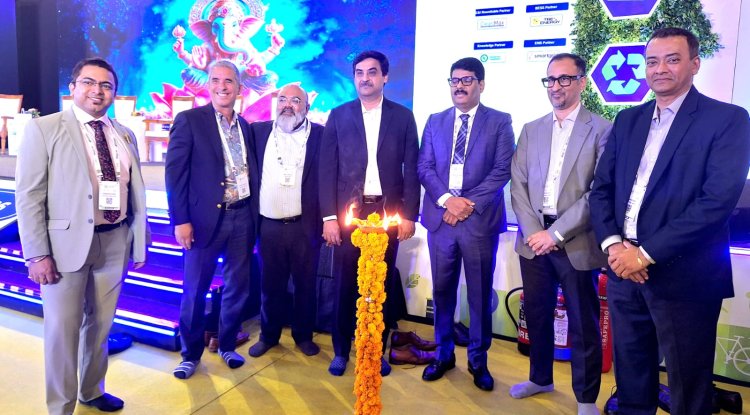
India will require 888 GWh of energy storage capacity by 2035-36, according to the India BESS Market Review released by the India Energy Storage Alliance (IESA) and Customized Energy Solutions (CES) at India Energy Storage Week (IESW) 2026.
The report estimates a sharp increase from the country's current energy storage capacity of around 1 GWh. It says battery energy storage systems (BESS) will play an increasing role in supporting renewable energy integration and maintaining grid reliability.
Installed BESS capacity rose from 0.78 GWh in December 2025 to 8.7 GWh during the first half of 2026, the report said. It added that the country is expected to cross 10 GWh of installed BESS capacity by the end of the year. During the same period, tenders for 47 GWh of energy storage projects were issued, taking the total tender pipeline to 260 GWh.
The report said 18 BESS projects have been commissioned so far. Merchant BESS installations accounted for about 70% of the capacity added during the first six months of 2026.
It also outlined developments in domestic manufacturing. India's lithium-ion battery cell manufacturing capacity is currently around 2 GWh, while announced projects target about 110 GWh by 2030. Cell and battery pack-to-container manufacturing capacity is projected to reach between 180 GWh and 200 GWh by 2030.
Debmalya Sen, President of IESA, said the projected storage requirement reflects the growing role of energy storage in India's electricity system as renewable energy capacity expands.
Nitin Bhatia, Chief Executive Officer of Radiance Renewables, said greater collaboration among industry, policymakers and equipment suppliers would be needed to improve battery competitiveness and support wider deployment.
Tanya Singhal, Vice President and Country Head (India) at the Global Energy Alliance for People and Planet, said storage would need to be integrated across generation, transmission, distribution and consumption to improve the flexibility of the power system.
India Energy Storage Week 2026 is being held at Yashobhoomi in New Delhi. The three-day event has brought together more than 200 exhibitors and delegates from 15 countries to discuss developments in energy storage, electric mobility and clean energy technologies.
According to the report, India's battery energy storage sector has continued to expand despite higher battery prices and supply chain disruptions, supported by project activity, manufacturing plans and government policy initiatives.
What's Your Reaction?