India Proposes Five-Point Climate Strategy for Mountain Protection
India proposed a five-point global climate strategy at Nepal’s Sagarmatha Sambaad summit, focusing on scientific collaboration, community empowerment, resilience building, climate finance, and global recognition to safeguard Himalayan ecosystems.
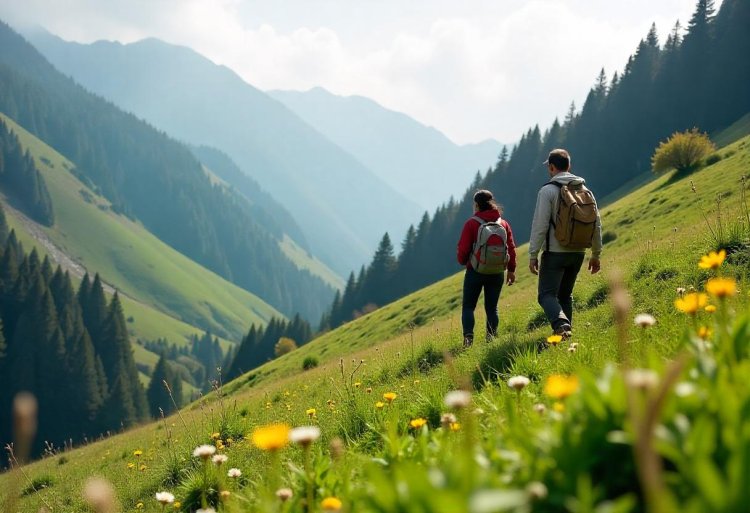
India presented a five-point action plan on the global stage for preserving sensitive mountain ecosystems, urging increased global collaboration at the Sagarmatha Sambaad climate summit in Kathmandu, Nepal. Indian Environment Minister Bhupender Yadav presided over it and spoke about increasing threats to the mountains, particularly in the aftermath of mounting climate change. The conference, with the theme "Climate Change, Mountains, and the Future of Humanity," gathered local and global stakeholders to construct mutual campaigns against environmental issues.
India was present at the summit by Yadav, pointing to the fragility of the Himalayan environment and emphasizing the importance of concerted and urgent action. Mountain ecosystems like the Himalayas are being negatively affected in the form of environmental change like glacier recession, erosion of biological diversity, and rising frequencies of natural hazards like glacial lake outburst floods. India's draft strategy attempts to turn these trends around with focused scientific and policy intervention.
The five-point agenda includes increased scientific collaboration, increased climate resilience, empowerment of communities, mobilization of green finance, and international recognition of mountain views. The main points are to be directed towards promoting sustainable development and environmental management in South Asian nations' common transboundary mountain areas.
Through the first dimension—increased scientific cooperation—India focused on the need for increased research in areas of cryosphere change, hydrological change, and biodiversity loss. Improved data sharing systems and surveillance networks are critical for understanding climate risks as well as science-informed policy decision-making.
The second priority segment is the development of climate resilience in the mountains. India emphasized climate disaster management infrastructure and early warning. This includes limiting the heightened threat of glacial lake outburst floods, which pose risks to life, agriculture, and infrastructure in remote areas.
The third seeks to empower mountain communities. India suggested that development policy has to prioritize indigenous and local community health and wellbeing. Their customary practices of doing things and know-how incorporated into climate policy are considered to be key to successful long-term adaptation actions.
Green finance access was India's fourth pillar of climate attractiveness. It was centered on non-compliance by developed nations in climate finance provision and technology transfer. It held that comparable, reliable, and adequate support in finances is required to allow developing countries, led by mountain nations, to act accordingly on climate under the United Nations Framework Convention on Climate Change (UNFCCC) and the Paris Agreement.
The fifth and last proposal called upon global institutions to officially acknowledge mountain ecosystems in climate policy discourse. India proposed that international forums integrate mountain concerns into sustainable development agendas and climate negotiation in a way wherein these ecosystems are well represented globally.
India also mentioned its in-situ conservation efforts, like the Snow Leopard Project. India has already marked 718 snow leopards from 2019-2023, a considerable percentage of the world's total. It is an approximate figure that constitutes India's contribution to maintaining the mountains as biologically diverse and is something that other nations with similar ecosystems can learn from.
To enable such a commitment, India collaborated towards intensified collaboration through platforms like the International Big Cats Alliance Forum. This involves cooperative interaction with other Himalayan nations like Nepal and Bhutan, in addition to other range countries, for big cat conservation like the snow leopard, tiger, and leopard. Cross-border cooperation is necessary in population tracking, habitat protection, as well as human-wildlife conflict management.
The session was convened with top-level leadership and South Asian, East Asian, and other regional members, such as Nepal's Prime Minister KP Sharma Oli, Nepal's Foreign Minister Arzu Rana Deuba, China's Vice Chairman of the National People's Congress Xiao Jie, and Azerbaijan's Ecology Minister and COP29 President Mukhtar Babayev. The leaders together acknowledged the importance of mountain ecosystems to regional water security, cultural identity, and biodiversity.
India's address at Sagarmatha Sambaad cemented its position as a South Asian climate leader and, specifically, mountain conservation. In advocating a massive action plan, it aimed at building momentum for multilateral action and seeking mammoth support from richer nations.
As climatic challenges to the mountain ranges, and indeed South Asia as a whole, continue to rise, the Indian strategy establishes a perfect balance between conservation and development. The strategy also aims to balance national initiatives and international architecture in a bid to achieve intensified global climate mitigation, adaptation, and biodiversity protection.
As countries gear up for the next series of global climate change talks, India's move is a welcome reminder that global collective action, inclusive decision-making, and financial support are not only essential in order to achieve mountain vulnerability, but also that interventions must be collective, global, not local.
Source/Credits:
Content adapted from The Hindu
What's Your Reaction?