An MoU signed between NTPC Green Energy and Assago Industries will establish India’s first large-scale green urea plant at Pudimadaka, using renewable hydrogen and captured CO₂ to reduce carbon emissions and import dependence.
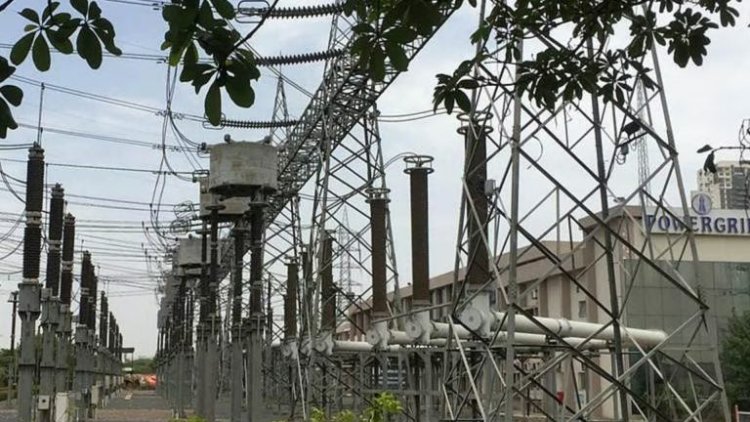
India plans to construct one of its first large-scale domestically developed green urea facilities within the Pudimadaka Green Hydrogen Hub, located in Andhra Pradesh. Instead of relying on traditional methods, this initiative aims to substitute fossil fuel-derived materials involved in standard urea synthesis. Emissions stemming from fertilizer production—which is an energy-intensive sector—may decline as a result. With that in mind, the shift targets cleaner industrial practices by rethinking core chemical feedstocks. Notably, the approach is intended to rely more on domestic engineering systems rather than imported technology. Over time, such efforts could influence how nitrogen-based nutrients are manufactured across similar economies. In parallel, environmental impact may lessen due to reduced carbon output during processing stages. As part of broader changes, resource efficiency gains attention without fully depending on existing infrastructure patterns. Therefore, progress hinges on integrating renewable inputs into large-scale chemical operations. Ultimately, success would reflect measured advancement toward sustainable material cycles.
A deal was finalized when representatives from NTPC Green Energy Limited and Assago Industries signed an agreement. Following this step, construction of a new industrial site will move forward. At full operation, output is expected to reach roughly 1,000 metric tonnes daily. The product will be classified as green urea. This outcome depends on inputs such as low-emission ammonia. Carbon dioxide captured from industrial emission streams also plays a role. Power needs will be met primarily through energy drawn from renewable sources. Each component enters the process under strict conditions. Both scale and consistency in supply will be critical for commercial viability. Progress hinges on coordination across multiple sectors. Once active, performance metrics will focus on maintaining stable production.
A site has been chosen within the Pudimadaka Green Hydrogen Hub, a coastal industrial area designated for environmentally focused hydrogen and chemical production. Over time, it is planned to support manufacturing capacity reaching up to 2.5 million metric tonnes annually, covering substances such as methanol, renewable aviation fuel, and fertilizer materials.
Hydrogen used in conventional urea production in India typically originates mainly from natural gas. In contrast, green urea relies on hydrogen produced via electrolysis using renewable power sources. As a result, emissions during manufacturing can drop significantly. Dependence on fossil fuel imports also decreases.
Green ammonia, renewable electricity, and captured carbon dioxide will be supplied by NTPC Green Energy Limited under the agreement. Equipment and infrastructure support associated with these inputs also fall under its responsibility. Engineering work, construction, and ongoing facility management will be handled by Assago Industries. Project timelines and funding details have not been disclosed.
The initiative aligns with the national green hydrogen programme, which aims to advance domestic low-emission fuel and industrial material production. Given its substantial energy requirements and reliance on imported raw materials, fertilizer manufacturing has been identified as a priority sector under India’s National Green Hydrogen Mission.
However, large-scale green hydrogen initiatives face challenges. Production costs remain higher than those of conventional fuels, and extensive renewable energy capacity is required. Storage and distribution networks are still underdeveloped. Progress depends on cost reductions, clearer policy frameworks, and stable supply chains. Industry stakeholders note that outcomes rely on logistical reliability, financial viability, and regulatory certainty.
If developed as planned, the Pudimadaka facility could rank among India’s first full-scale green urea plants. Success will depend less on design and more on operational performance, cost control, and the speed at which supporting systems are established.
What's Your Reaction?