Google Signs First Offshore Wind PPA In Asia Pacific
Google signs its first offshore wind PPA in Asia Pacific with a 495 MW project in Taiwan for carbon-free energy.
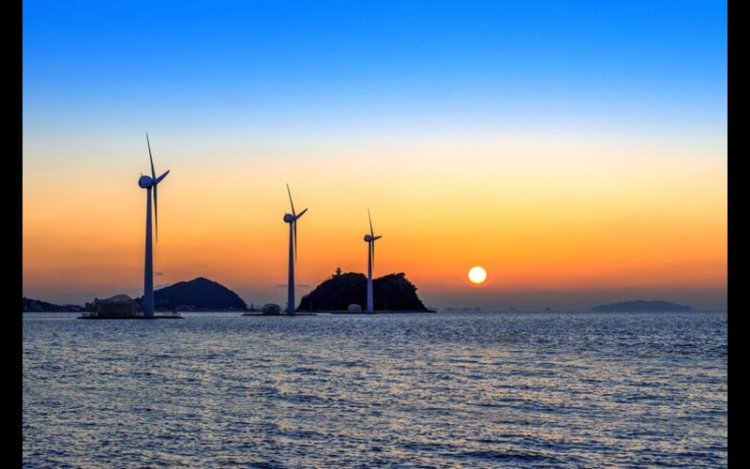
In a major step towards its ambitious sustainability targets, Google has executed its first Asia Pacific offshore wind power purchase agreement (PPA). The tech giant has agreed to buy clean energy from the 495-megawatt (MW) Fengmiao I offshore wind project in Taiwan. This pioneering transaction is not just a local precedent but also a critical milestone in Google's international endeavor to run fully on carbon-free energy (CFE) for every single hour of every single day by 2030.
Copenhagen Infrastructure Partners (CIP), an established global renewable energy company, is developing the Fengmiao I offshore wind project. The deal with Google is a significant milestone for the project, which just closed on finances—being the first project from Taiwan's Round 3.1 offshore wind auction to do so. The wind farm will come online in 2027 and is set to be a driving force for the expansion of Taiwan's renewable energy sector, specifically offshore wind.
I-Chun Hsiao, Senior Lead for APAC Energy and Infrastructure at Google, emphasized the strategic importance of this development. “This project will help power our data center, cloud region and offices in Taiwan,” she said. “By integrating offshore wind with our existing solar and geothermal projects, we’re advancing our 24/7 carbon-free energy goal while helping Taiwan bring on new energy resources to help meet electricity demand.”
The agreement mirrors Google's larger sustainability strategy and supports its vision for decarbonizing its operations worldwide. Alphabet, the parent company of Google, unveiled Google's vision for 24/7 CFE in 2020. Ever since, Google has been consistently working towards the goal, finding innovative and regionally diverse sources of energy that fit its operating requirements and its environmental ethos. This new deal in Taiwan is a concrete illustration of that vision becoming a reality.
Fengmiao I represents the second offshore wind partnership between Google and CIP. The deal was initiated via CIP's CI V fund, which closed last year at €12 billion (roughly USD $13.1 billion). That fund is designed to finance clean energy transition initiatives in stable, low-risk economies—putting Taiwan on its investment map.
Google's commitment to renewable energy in Taiwan isn't starting with Fengmiao I. The company has already been present in the region through a range of clean energy projects. Among them are a purchase deal for geothermal power with Baseload Capital and a solar investment collaboration with international asset manager BlackRock. All these projects combined increase Google's local presence in Taiwan's clean energy sector, supporting both regional energy development ambitions and international environmental needs.
Aside from its operational importance, the PPA is also a landmark for Taiwan's energy transition. Offshore wind has been at the center of Taiwan's policy to diversify its energy mix and lower its dependence on fossil fuels. The financial close and construction of Fengmiao I under the government's Round 3.1 auction program testifies to the growing confidence in the industry on the part of investors, and with a prime tech industry company like Google involved now, the message to the wider market is clear: Asian Pacific offshore wind is both feasible and scalable.
This PPA reflects a shift in practice for large companies toward going beyond classic renewable energy supply models. In lieu of merely buying renewable energy credits or investing in projects distant from their true activities, corporations such as Google now invest in energy solutions that not only match the geography of their energy usage but also the timescale. The aim of matching each hour of electricity use with local, clean energy production is a radical departure from the more typical annual or monthly accounting models—and it raises the bar for the rest of the business world.
While the world lags behind the clock ticking loudly for action to mitigate climate change, alliances like the one involving Google and CIP are apt demonstrations of what can be accomplished by the private sector in forcing the pace towards the clean energy revolution. As it leverages its worldwide footprint and capital weight, Google not only makes itself environmentally cleaner but also facilitates creating the infrastructure and market faith conducive to more wide-ranging systemic overhaul.
As the Fengmiao I offshore wind farm is slated to come online in 2027, the effect of this deal will be short-term and long-term. It makes Google a frontrunner in corporate sustainability in the Asia-Pacific region and once again consolidates Taiwan's position as a burgeoning hub for offshore wind farms. As 2030 approaches, transactions such as this will prove pivotal in helping to determine whether or not worldwide sustainability goals are achievable—and whether the vision for a genuinely carbon-free future will be made reality.
What's Your Reaction?