Japfa’s £117m sustainability-linked loan, backed by DBS and Rabobank, faces criticism for ignoring deforestation and human rights risks in its supply chains, raising concerns about its environmental impact and the credibility of sustainable finance in agriculture.
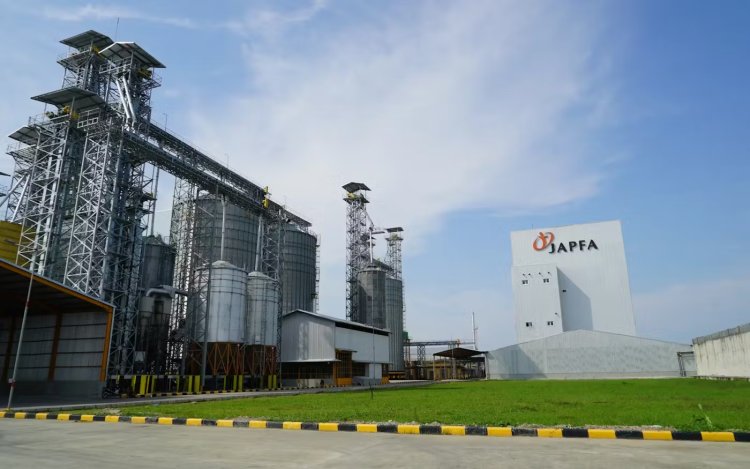
A £117 million green loan linked to sustainability, backed by Singaporean agri-food business Japfa, has been condemned by environmental NGOs as ineffective in excluding deforestation and human rights abuses along its supply chain. The DBS Bank and Rabobank-backed loan will cut water and coal consumption but is missing intended key performance indicators (KPIs) on forest-risk commodities or social issues, which has made it suspect and raised questions on banks' intent for deforestation-free finance.
Japfa, one of Asia's biggest agri-food companies, raises poultry, beef, and other farm products in a number of countries. The firm has been under sustained criticism for its environmental footprint, particularly its association with deforestation due to such products as palm oil, soy, pulp and paper, and beef. In a 2025 Forest 500 report, Japfa had only 9 out of 100 for its exposure to risks from these forest-risk commodities, with no public commitment to eliminate deforestation, peatland clearing, or exploitation in its supply chain. It is particularly weaker than rivals such as Wilmar, Musim Mas, and foreign companies such as Nissin and Kao with stronger sustainability policies.
The SLL launched on 10 June 2025 is Japfa's inaugural one to incorporate social KPIs in a funding instrument and centers on issues such as water conservation and less reliance on coal. Environmental groups, nevertheless, assert that the actions do not go sufficiently far in mitigating the firm's overall environmental impact, especially the lack of deforestation-related KPIs, as agriculture remains a leading cause of environmental degradation. Industry reports reveal that agriculture causes 80% of the world's deforestation, 70% of water withdrawal, and a third of greenhouse gas emissions. Japfa's inability to address such problems disqualifies the loan as sustainable, says critics.
DBS and Rabobank, co-sustainability managers, are also in the dock. Environmentalists are asking if the banks' entry into the sector is consistent with the banks' own deforestation-free lending policies. A recent study recently uncovered that between 2018 and 2023, over £223 billion in sustainability-linked loans was granted to companies associated with deforestation and environmentally destructive sectors globally. This raises questions about whether such instruments can effect change, especially in Asia where loan markets are less transparent compared to bond markets.
The broader context of global food systems adds additional vigor to such doubts. A 2025 KPMG report emphasized that the agricultural environmental impact, such as deforestation and greenhouse gas emissions, threatens over 820 million of the world's hungry people with food insecurity. The report demands immediate investment in resilient and sustainable food systems, with an estimated £860 billion per year for the next five years needed to keep pace with the ambition of the Paris Agreement. Japfa's loan, while advancement towards sustainability, does not solve these systemic issues, especially in high-risk sectors such as deforestation.
Others believe that Japfa's loan indicates a larger problem with sustainability-linked lending. SLLs, unlike conventional green loans, correlate incentives from finance to certain KPIs but are often secretive in nature and susceptible to accountability hiding. The secrecy in Japfa's loan structures has caused doubts about its efficiency. For comparison, other companies like COFCO International have pledged strongly, with 99% deforestation-free Brazilian soy purchases by 2024 and entirely deforestation-free supply chains by the close of 2025. Japfa's failure to make such pledges is one shortcoming of its sustainability strategy.
The loan's emphasis on reducing water and coal, while good, fails to treat the cause of Japfa's environmental degradation. Deforestation due to beef and soy farming, for example, generates a lot of greenhouse emissions and loss of species diversity. Environmentalists fault Japfa for shallow promises of sustainability since they lack specific goals to eliminate such threats. Japfa's activities in deforestation areas like most of Southeast Asia serve to increase the need for tougher policies.
Japfa loan is also criticized for highlighting the underlying issues with sustainable agriculture. Projects such as the European Union's "Farm to Fork" strategy and India's Digital Agriculture initiative demonstrate how governments and businesses are leveraging technology and policy to propel sustainability. Japfa does seem to have a narrow thinking, looking at incremental change rather than revolutionary transformation. Green organizations are asking Japfa to commit credibly to deforestation-free supply chains and human rights safeguards, following international standards like the EU Deforestation Regulation (EUDR).
Japfa's loan scandal serves to remind us that more responsibility in green finance is needed. With increasing demand for sustainable agriculture around the world, firms and banks have to put transparency and strong environmental ambitions at the top of their agendas. While Japfa's loan shows a step towards mainstreaming social KPIs, its failure to explicitly address deforestation and human rights issues lowers its impact. The environment activists urge Japfa and its bank partners to re-orient the terms of the loan to include measurable objectives on deforestation and its meaning in line with global sustainability goals.
In all, Japfa's £117 million sustainability-linked loan has caused debate over the effectiveness of such financial products in addressing the environmental concerns of the agricultural industry. Although the loan is to fund greater water and coal consumption, its lack of deforestation and human rights objectives has angered green campaigners. As the agri-food industry increasingly faces pressure to go green, Japfa and its investors have a responsibility to make up for these gaps if it is to have a credible sustainability strategy. The example highlights the importance of clear, stretching commitments in ensuring that sustainability-linked financing is effective for environmental and social impact.
Source: Eco-Business, "Agri-food giant Japfa's new sustainability-linked loan overlooks deforestation risk"
What's Your Reaction?