Bombay High Court Asks Government to Act Over Maharashtra Plastic Flowers Ban
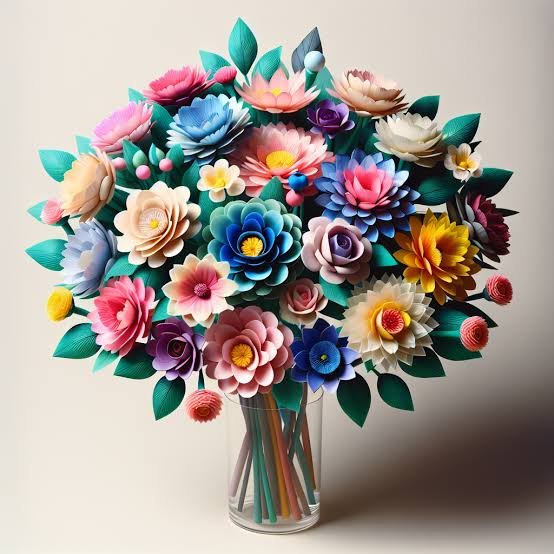
Mumbai, 5th July, 2024: Bombay High Court ordered Union Government, Maharashtra Government, Maharashtra Pollution Control Board (MPCB), and Central Pollution Control Board (CPCB) to answer an appeal seeking a ban on plastic flowers in Maharashtra. The appeal has been filed by Growers Flowers Council of India (GFCI), appealing that plastic flowers, especially those with a diameter of less than 100 microns, are polluting the environment and must be included in the list of single-use plastics (SUPs).
Petition Opposing Exclusion of Plastic Flowers from Plastic Ban
GFCI petition against further sale, manufacture, and stockpiling of plastic flowers after Maharashtra government's notification issued on March 8, 2022, banning a group of single-use plastics. The MPCB notification had already banned plastic items like earbuds, plastic stick for balloons, thermocol decorative pieces, plastic cutlery, and packing films in Maharashtra Plastic and Thermocol Products (Manufacture, Usage, Sale, Transport, Handling, and Storage) Notification, 2018. The above ban doesn't include plastic flowers.
Government Stand on Plastic Flowers
Hitherto, the Ministry of Environment, Forest and Climate Change (MoEFCC) has been arguing that single-use plastic items are so labeled because they had been disposed of once before their first use. Plastic flowers never featured to be banned in the list because they were not among the expert committee of the Department of Chemicals and Petrochemicals (DCPC) report that identified 40 pieces of single-use plastics.
Court's Observation on Destroying the Environment
A division bench of Chief Justice Devendra Kumar Upadhyaya and Justice Amit Borkar in the case raised the question of whether plastic flowers were not turning into non-biodegradable waste even though they were less than 100 microns in size. Judges referred to some provisions of the Maharashtra Non-Biodegradable Garbage (Control) Act, 2006, such as no waste will be discharged through drains, lakes, and other bodies of water that are non-biodegradable.
The case of the petitioners is that plastic flowers averaging 29 microns in thickness fall within the prohibition of Section 4 of the 2006 Act, under which there is a discretion in the government to prohibit or restrict noxious substances.
Previous Attempts at Banning Plastic Flowers
The petition also mentions the October 14, 2020, letter of Commissionerate of Agriculture, Maharashtra, to Union Ministry of Environment, Forest and Climate Change in an attempt to express concern regarding the environment impact of plastic flowers. The letter asked the Centre to issue guidelines so that their sale and manufacturing would not be permitted in the notified bans on other single-use plastics.
Court's Directives and Next Steps
Bombay High Court ordered Union Government, MPCB, CPCB, and Maharashtra Government to reply within a period of four weeks. Rejoinder has ample time. Hearing on August 9, 2024.
If plastic flower ban is ordered, Maharashtra would likely experience even tighter control on the production and sale thereof, if the further drive already has been given for avoiding plastic polluting.
Implications of a Possible Ban
Plastic flower ban would have an impact on various industries like retail industry, decorative industry, and the floriculture industries. It would force the companies to replace that with something else which is of biodegradable nature, i.e., paper flowers or cloth flowers. That would also be of positive contribution towards India's plastic reduction campaign, as well as global green policies.
Conclusion
With plastic pollution rapidly becoming a global environmental problem, the Bombay High Court case has the potential to make the government change its policy on prohibiting plastics. The case will be keenly observed for how it affects Maharashtra and India's single-use plastic legislation.
Source:Bombay High Court Writ Petition No. 9265 of 2024, Maharashtra Pollution Control Board Notification, Ministry of Environment, Forest and Climate Change.
What's Your Reaction?