E-waste is India’s defining circular economy test not because it is complex, but because it demands alignment across policy, technology, capital, and behaviour, writes the author
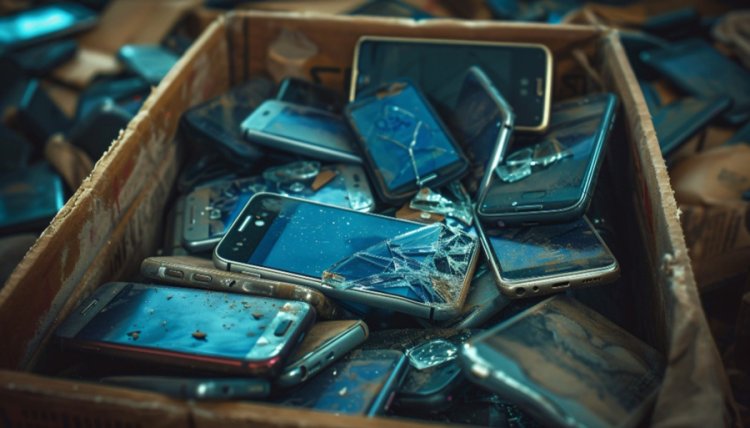
E-waste has decisively moved from the periphery of India’s sustainability discourse to its very core. As India accelerates digital adoption, expands electronics manufacturing, and deepens its ambitions in clean energy and electric mobility, electronic waste has emerged as the most revealing test of whether the country’s circular economy vision can translate from policy intent into real-world execution.
This challenge is no longer theoretical. India’s e-waste generation has nearly doubled over the past decade, from roughly 2 million metric tonnes in FY14 to close to 4 million metric tonnes in FY24. Consumer electronics alone contribute almost 70% of this volume. Yet, despite the scale, only about 16% of consumer e-waste is processed through authorised, formal recycling systems. The rest is handled by informal channels or remains unused in homes and offices, quietly accumulating risk and lost value.
Embedded within this discarded electronics stream is an economic opportunity estimated at nearly $6 billion in recoverable metals, value that remains largely untapped due to fragmented collection, low recovery efficiency, and limited downstream integration. By 2026, India’s position as the world’s third-largest generator of e-waste will only harden. Shorter device replacement cycles, proliferation of connected devices, and the rapid expansion of battery-powered electronics will push volumes higher. At this scale, e-waste is no longer an environmental issue alone; it is a structural economic and strategic concern.
From Waste Management to Material Security
The true significance of e-waste lies not in what it is, but in what it contains. Discarded electronics are rich repositories of copper, aluminium, precious metals, and critical minerals that are foundational to India’s electronics manufacturing, clean energy, and digital infrastructure ambitions. Today, India remains heavily import-dependent for many of these materials. Global supply chains are increasingly volatile, shaped by geopolitics, resource nationalism, and competing energy transitions. In this context, e-waste represents one of the few scalable, domestic sources of strategic materials available to India.
However, unlocking this value requires a shift in approach. Informal processing methods, still dominant in many parts of the country, recover only a fraction of embedded materials and often do so at significant environmental and human cost. Low yields, unsafe handling practices, and poor material utilisation mean that much of the potential value is permanently lost. A functional circular economy demands advanced recycling technologies capable of extracting metals at high purity and reintegrating them into manufacturing supply chains. Hydrometallurgical and advanced metallurgical processes are no longer optional; they are essential infrastructure if e-waste is to move from a liability to a strategic resource.
Policy Progress, Execution Gaps
India has made meaningful progress on the regulatory front. Extended Producer Responsibility (EPR) has introduced accountability across the electronics value chain, signalling a shift from voluntary compliance to systemic responsibility.
Yet, execution remains uneven. Traceability continues to be a weak link. Collection, aggregation, dismantling, and material recovery often operate in silos, with limited data visibility across the chain. Without robust digital tracking and auditable material flows, compliance risks becoming a paperwork exercise rather than a driver of environmental and economic outcomes.
Strengthening traceability, through digital systems, standardised reporting, and enforcement consistency, will be critical to closing this gap. Only then can regulation translate into measurable recovery, reduced leakage, and improved investor confidence.
Economics of Scale and Investment Readiness
E-waste recycling is no longer a niche sustainability activity. It is emerging as a serious industrial opportunity. India’s e-waste recycling market is already valued at over $2.8 billion in 2025 and is projected to grow steadily through the next decade.
However, scaling this sector requires more than demand. Recycling infrastructure is capital-intensive and technology-driven. Investors are willing to participate, but they seek clarity on policy stability, enforcement consistency, and assured feedstock availability. Public–private collaboration can play a catalytic role, particularly in building regional processing hubs, formalising collection networks, and supporting early-stage technology deployment.
The Role of Consumers and the Informal Ecosystem
No e-waste system can succeed without consumer participation. Despite rising awareness, responsible disposal remains inconvenient for many households and small businesses. Devices are often stored indefinitely or sold into informal channels due to lack of accessible, trusted alternatives.
At the same time, the informal workforce continues to form the backbone of collection. The path forward lies not in displacement, but in integration – through training, aggregation partnerships, safer working conditions, and linkage to formal recycling infrastructure.
The Test Ahead
By 2026, the direction will be unmistakable. India’s volumes of end-of-life electronics will rise sharply, and the cost of inaction will escalate – environmentally, economically, and strategically.
E-waste will reveal whether India’s circular economy framework can move beyond intent to execution, beyond regulation to results. Success would mean domestic material security, reduced import dependence, cleaner cities, and globally competitive recycling capabilities. Failure would mean mounting environmental damage, lost economic value, and deeper strategic vulnerability.
E-waste is India’s defining circular economy test not because it is complex, but because it demands alignment across policy, technology, capital, and behaviour. The next two years will determine whether India rises to that challenge or allows one of its most valuable resource streams to slip through the cracks.
Views are personal
What's Your Reaction?