Solar Tandem Perovskite Cell Technology Advances Renewable Energy
Solar tandem perovskite cells are boosting renewable energy with higher efficiency and lower costs, led by advancements from Qcells, Trina Solar, and LONGi.Learn about solar tandem perovskite cell technology, its high efficiency, and its role in advancing renewable energy, with insights into ongoing challenges and global adoption.
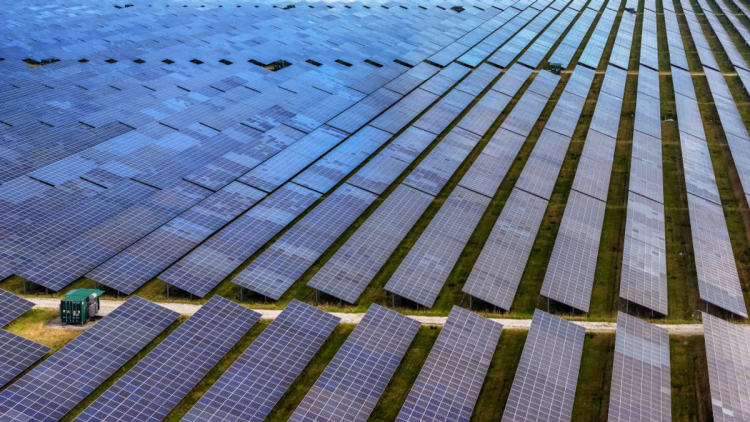
Solar tandem perovskite cell technology is driving advancements in renewable energy, offering higher efficiency and lower costs compared to traditional solar panels. Companies like Qcells, Trina Solar, and LONGi are pushing the boundaries of this technology, bringing it closer to commercial scalability.
Tandem perovskite-silicon solar cells combine a perovskite top cell with a silicon bottom cell to capture different wavelengths of sunlight, significantly improving energy conversion efficiency. Traditional silicon solar cells have an efficiency limit of around 26%, but tandem cells can achieve efficiencies above 30%. In 2025, Qcells reported a record efficiency of 28.6% for a commercially scalable tandem cell, while LONGi achieved 34.85% for a two-terminal design. These breakthroughs are reducing the cost of solar energy, making it more competitive with fossil fuels.
The perovskite layer in these cells absorbs high-energy light, while the silicon layer captures low-energy light, maximizing energy output. This dual-layer approach allows panels to produce more electricity per unit area, ideal for space-constrained applications like rooftop solar. Additionally, perovskite cells are cheaper to produce than traditional silicon cells, as they require fewer materials and simpler manufacturing processes. Companies like Trina Solar are scaling up production, with plans to integrate tandem cells into large-scale solar farms by 2027.
Despite their promise, perovskite cells face challenges, particularly in durability. Early designs degraded quickly under heat and light, limiting their lifespan compared to silicon cells, which last 20–25 years. Recent advancements, such as IIT Bombay’s four-terminal tandem cell with 26% efficiency, have improved stability, making the technology more viable for commercial use. Research is also exploring chalcogenide perovskites, which are more durable and less toxic, addressing environmental concerns.
The global push for renewable energy is driving investment in tandem cells. In 2024, over 340 GW of solar capacity was installed worldwide, and tandem cells are expected to play a larger role as costs decline. India, China, and Saudi Arabia are investing heavily in this technology to meet decarbonization goals. However, scaling production and ensuring long-term reliability remain key hurdles to widespread adoption.
Conclusion
Solar tandem perovskite cell technology is transforming the renewable energy sector with its high efficiency and cost advantages. While challenges like durability persist, ongoing research and investments are paving the way for broader adoption, supporting global efforts to transition to clean energy.
Source: ESG Dive
What's Your Reaction?