A new study suggests that microplastic pollution in the oceans may be contributing to increased warming in the Earth's troposphere.
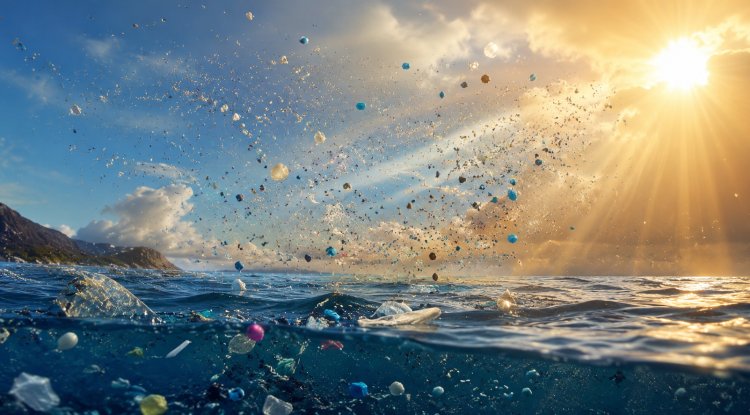
Researchers have now identified that smaller plastic fragments from the sea entering the atmosphere can alter how the sun's radiation is absorbed and diffused, potentially influencing global warming, according to a study released today in the journal, Nature Climate Change. Alongside their damaging effects on marine ecosystems, as previously noted, this research indicates microplastics could be affecting the Earth's energy balance, a factor that has so far been ignored in the climate equation.
Micro-plastics are smaller pieces of plastic (less than 5 millimetres) produced when larger fragments of plastic break down within the environment. Abundant in ocean environments worldwide, they can be carried up into the air as microscopic particles by wind and wave motion. Once they are airborne, the particles can react to sunlight and cloud formations that affect the air's heating and cooling, researchers report.
The research team, which included scientists from seven institutions, used lab experiments and data from satellites and climate models to examine the impact of size and type of microplastics on light absorption. The group found coloured and pigmented microplastics, which are found in many consumer products, are more efficient in absorbing sunlight than previously believed.
Once these particles absorb heat, they can warm the atmosphere like other aerosols such as black carbon. Using climate simulations, the researchers estimated that the warming impact on climate from airborne microplastics could be about one-sixteenth as large as warming from black carbon, a powerful climate-warming pollutant from burning fossil fuels.
Plastic's effect on radiative forcing could locally be as significant as traditional pollutants in regions where there is significant plastic pollution, for example in the vicinity of major plastic garbage patches in the oceans. The authors stress that it is still unclear how significant this contribution to global warming may be, but point to a new pathway that should be studied. Existing climate models generally airborne microplastics, so climate change projections could be incomplete.
The researchers hope the study will draw greater attention to plastic pollution as an ecological threat, as well as a potential climate factor. Reducing the amount of plastic released into the atmosphere and especially into the oceans – can bring benefits not only in the areas of environment and human health, but also climate.
What's Your Reaction?