Sustainable Sports Retail Tackles Plastic Pollution with Circular Models
Sports retail giants like Decathlon, Nike, and Adidas are adopting circular economy models to reduce plastic pollution, aligning with India’s EPR policies and global sustainability goals.Sports retail tackles plastic pollution with circular models, reducing single-use plastics and aligning with India’s EPR rules to combat environmental degradation.
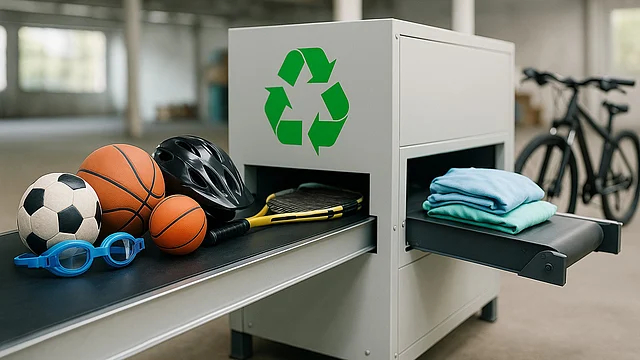
On June 4, 2025, sports retail giants like Decathlon, Nike, and Adidas announced initiatives to combat plastic pollution through sustainable practices and circular economy models. With less than 10% of global plastic recycled, these efforts aim to reduce environmental impact and align with consumer demand for eco-friendly products. The shift highlights the sports retail industry’s role in addressing the 9.3 million tonnes of plastic waste India generates annually, a major contributor to global pollution.
The sports retail sector, valued at $500 billion globally, relies heavily on plastic for products like apparel, footwear, and equipment, contributing to the 400 million tonnes of plastic produced annually worldwide. In India, which generates 10.2 million tonnes of plastic waste each year—20% of global output—the industry faces pressure to adopt sustainable practices. Recent initiatives by Decathlon, Nike, and Adidas focus on reducing single-use plastics and integrating recycled materials, aligning with India’s Plastic Waste Management (PWM) Rules and global calls for circularity.
Decathlon has eliminated 1,663 tonnes of single-use plastic across its value chain by 2024, achieving a 57% reduction internationally through measures like removing plastic packaging and hangers. The company’s Second Life Bazaar campaign promotes refurbished sports gear, extending product lifecycles and reducing waste. Nike incorporates recycled polyester into 70% of its apparel, while Adidas has produced shoes from ocean plastic, recovering 5 million tonnes of marine debris since 2015. These efforts respond to a 2024 study in Communications Earth & Environment, which found that only 9% of global plastic is recycled, with most derived from fossil fuels, exacerbating climate change.
The circular economy model is central to these initiatives. By designing products for durability, repairability, and recyclability, brands aim to minimize virgin plastic use. Decathlon’s recycling programs recover 80% of materials from old gear, while Adidas’s take-back schemes convert used shoes into new products. These models align with India’s Extended Producer Responsibility (EPR) framework, which mandates producers to recycle equivalent amounts of plastic packaging. Since April 2025, beverage makers must use 30% recycled plastics in rigid packaging, a policy sports retailers are adapting to by investing in Material Recovery Facilities (MRFs).
India’s plastic waste crisis, with recycling rates dropping to 15–20% from 60%, underscores the urgency of these efforts. The country’s 10-to-1 ratio of plastic dump sites to sanitary landfills, as noted in a 2024 Nature study, contributes to marine litter, with 80% of ocean plastic originating from land-based sources. Sports retailers are addressing this by exploring bioplastics, bamboo, and hemp as alternatives, though high costs—30–50% more than traditional plastics—pose challenges. Public-private partnerships, like those with MRFs, aim to improve waste collection and segregation, critical for scaling recycling.
Economically, sustainable practices create opportunities. India’s green products market, valued at ₹50,000 crore in 2024, is projected to grow 15% annually, with sports retail contributing through eco-friendly apparel and equipment. These initiatives support 100,000 jobs in recycling and manufacturing, particularly in MSMEs. Environmentally, reducing plastic waste could cut India’s 300 million metric tons of CO₂ emissions from plastic production by 10% by 2030. However, challenges include consumer resistance, as only 40% of Indian consumers prioritize sustainability, and inadequate infrastructure, with only 1,000 MRFs nationwide.
Globally, the sports retail sector’s efforts align with initiatives like Japan’s soluble plastic, which dissolves in seawater, and the EU’s push for circularity. The U.S.’s reversal of a paper straw mandate under the Trump administration highlights policy risks, emphasizing the need for consistent regulations. In India, barcode tracking for plastic packaging, effective July 2025, will enhance EPR compliance, but enforcement remains weak due to understaffed agencies. The industry’s collaboration with startups like Ecokaari, which upcycles 2.5 lakh plastic bags monthly, shows promise for localized solutions.
The mental health impact of plastic pollution, particularly on youth facing climate uncertainty, adds urgency. A 2025 Outlook Planet report notes that environmental degradation exacerbates emotional distress, yet stigma and limited school infrastructure hinder intervention. Sports retailers are addressing this indirectly through community programs promoting sustainable consumption, though broader awareness campaigns are needed. The sector’s shift to circularity could serve as a model for other industries, like food and beverage, which struggle with single-use plastics.
Conclusion
Sports retail’s adoption of sustainable practices and circular models is a critical step in tackling plastic pollution, particularly in India, the world’s top plastic waste generator. While economic and infrastructural challenges persist, these initiatives align with global sustainability trends and India’s EPR policies, offering a path to reduce environmental and health impacts. Continued investment and policy support are essential for scaling these efforts.
What's Your Reaction?