Torcross in South Devon is experiencing increasing erosion from storms, and rising sea levels make its coastal defences and infrastructure increasingly vulnerable.
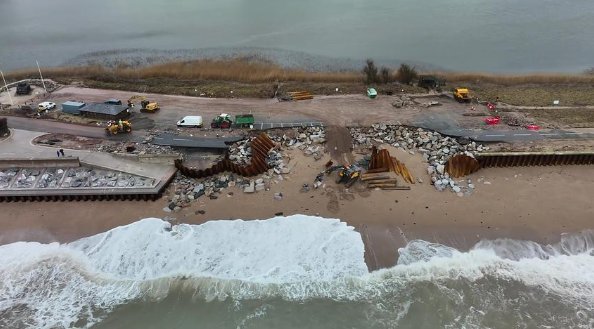
A small village in South Devon, name Torcross, is experiencing more and more erosion because of storms, and it is likely to get worse as sea levels continue to rise. To understand the situation, the University of Plymouth’s Coastal Processes Research Group has been studying Start Bay and the Slapton sands since 1990s. Each month researchers and students monitor and record the movement of the waves like how it moves and sand and gravel along the coast. This has made Start Bay one of the most surveyed coastlines in the UK, with more than 200 surveys taken, giving a clear idea of the interaction between the land and the sea.
The evidence shows that the extreme weather can carry as many as tens of thousands of bags of gravel along the beach. In Torcross alone, over 50,000 bags of gravel have been taken away from the front of the sea wall since 2007. The sea wall, which protects homes, businesses, and the A379 road, has been improved several times, with major repairs in 2016 costing approximately £3 million.
In January 2026, three intense southerly storms – Goretti, Ingrid, and Chandra – made their presence felt in the region one after the other, reducing the beach at Torcross to its lowest point since 2007. When a strong easterly storm made its impact in early February, the beach and road suffered extensive damage. Professor Masselink, who has been studying Slapton Sands for almost two decades, observed that the beach is now more than five meters lower than it was when he first visited in 2004. In the past two decades, the southerly waves have been consistently removing more gravel than the easterly waves.
This is not an historic issue. In 2001, the A379 road at Strete had to be resited due to storm damage. In 2013-14, storms which destroyed the Dawlish railway line also caused damage to the Torcross sea wall and road. This was also the case in 2016 and the “Beast from the East” storms of 2018.
The increase in sea levels, which has been 25cm over the last 110 years, makes storms more destructive. The increase in sea levels causes the waves to reach higher up the beach, causing more erosion of sand and gravel, as well as bringing the waves closer to houses and roads.
Houses and essential infrastructure have been constructed on this natural gravel barrier over the years, which puts them in the path of storm damage. Sea walls and other coastal protection measures can protect against flooding but cause the beach in front of them to be lower.
The January 2026 storms highlighted the vulnerability of these defences. Rebuilding the road and sea wall after every storm is not sustainable, especially with future sea-level rise expected. Experts say decisions about protecting Torcross and other coastal communities must balance human needs with scientific evidence to avoid repeated damage in the coming decades.
What's Your Reaction?