AI Alone Can’t Deliver the UN’s Pact for the Future, Say Experts
The UN’s Pact for the Future outlines global commitments on digital inclusion, AI governance, and sustainability, but experts say technology alone isn’t enough. Justice, updated science, and fair resource distribution are essential for its success, as seven out of eight Earth system boundaries have already been crossed.
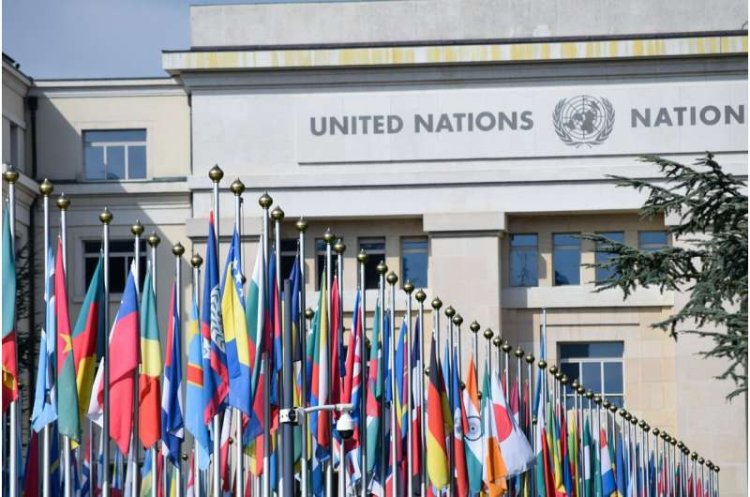
At the Summit of the Future held in New York in September 2024, United Nations member states approved the Pact for the Future. The agreement specifies responsibilities to defend the needs and interests of next generation as well as present ones. Narrowing the digital divide, guaranteeing inclusion, securing digital environments respecting human rights, and fostering responsible governance of artificial intelligence (AI) are all emphasized here.
The deal consists of two annexesthe Declaration on Future Generations and the Global Digital Compact. Together, they laid the foundation for quickening digital and artificial intelligence advancement. But even if future technologies are crucial to help the pact's goals, they are not enough on their own, researchers and specialists warn. Integrating environmental issues and broader justice is required.
Though falling short of including current scientific results on the environmental constraints of Earth, the pact ties itself with the UN's 2030 Agenda for Sustainable Development. Developed from recent research, these Earth system borders show that many of the planets' safe and equitable thresholds have already been breached. Continued overuse of natural resources might drive world systems toward permanent harm absent timely action.
Should countries meet the minimum social objectives set out by the Sustainable Development Goals (SDGs), it would put additional pressure on Earth's systems. This creates a contradiction: raising everyone's standard of living without exacerbating environmental damage will call for technological efficiency, equitable resource distribution, and political will.
Although justice is a main component of the agreement, its scope is still restricted. Only in the context of digital platforms and weapons does it address damage reduction. Particularly on topics like climate change, a more thorough incorporation of the no notable damage doctrine already established in environmental and human rights law would reinforce the agreement.
Beyond harm reduction, the agreement falls short in spheres including epistemic justice (recognizing different knowledge systems), data justice (fair data access and usage), and procedural justice (fair governance participation). Furthermore omitted from the treaty are important aspects including recognition justice, interspecies justice, and intragenerational equality. Understanding planetary limits and fairly distributing resources and dangers calls for a more thorough integration of Earth system justice.
The science shows more aspirational goals than now mentioned in world policy. For instance, 1C should be the upper limit for climate justice, according to studies, even if 1.5C is frequently quoted as the maximum permitted rising in world temperature to remain safe. Millions are already subjected to dangerously high heat and humidity at this level. Seven of eight major Earth system limits—including those on water, biodiversity, and nutrient cycles—have already been surpassed.
Technical remedies could be helpful. Using artificial intelligence and big data, digital twins—such as the European Commissions Digital Twin of the Ocean—simulate environmental systems in real-time. These instruments can help decision-makers understand and react to hazards. If extensively disseminated, Earth observation data can also help with environmental assessments and monitor national development.
AI is predicted to grow swiftly; hence it is imperative for sustainability. Its use, nonetheless, should help to prevent worsening inequities or more reliance on fossil fuels. There is an urgent need for a just transition; fossil fuel consumption has to be totally phased out to stay within climate limits. Still, many of the residual fossil deposits are found in the Global South. Moving away from these energy sources without enough financial backing would unduly burden developing countries already dealing with significant climatic effects.
Money is a significant hurdle. The UN has requested predictable, steady funding to assist its activities and enable developing nations to adjust to climate change. But the organisation is presently experiencing a cash flow problem. Only 51 countries paid their entire UN dues on time in 2024. Delayed or partial payments from major contributors are limiting the UN's ability to deliver timely, inclusive, and fair services.
Another major concern is debt. Developing countries paid a total of US$1.4 trillion in debt service in 2023. New financing approaches have to avoid further deepening these countries' debt. Without financial redistribution, the weight of global transitions would fall disproportionately on poorer nations.
AI and other sophisticated technologies should be used as instruments in this setting to assist bridge resource shortages, track environmental development, and increase access to services without aggravating inequity or carbon emissions. Still, they cannot replace fair resource distribution, world collaboration, and institutional reform.
The Pact for the Future establishes significant objectives, but its achievement will rely on how well it combines justice, mirrors the most recent environmental science, and provides the means required to act. Though the United Nations is still very important in organizing these initiatives, a lack of prompt and adequate financing now limits its capacity to provide.
Source:
Provided by The Conversation
Original author: Joyeeta Gupta
Edited by Lisa Lock | Reviewed by Andrew Zinin
What's Your Reaction?