A Stanford University study explains why Antarctic sea ice expanded for decades before collapsing in 2016, finding that trapped ocean heat and changing wind patterns together led to the rapid decline.
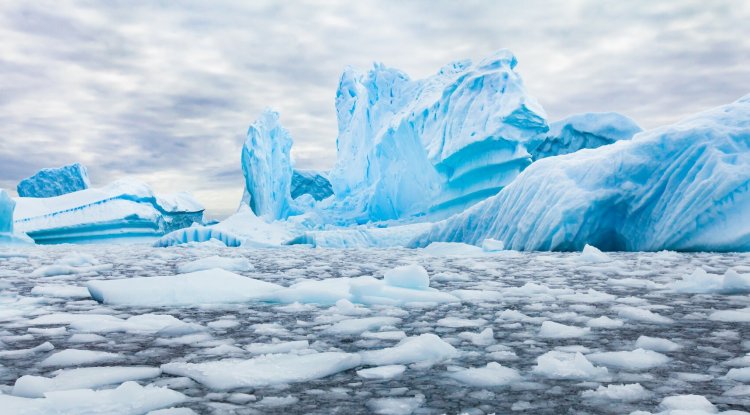
A study by Stanford University, published in the Proceedings of the National Academy of Sciences and reported by Phys.org, has explained why Antarctic sea ice expanded for decades before declining sharply in 2016. Researchers found that heat accumulating beneath the ocean surface, combined with changes in Southern Ocean winds, eventually caused the sudden loss of sea ice.
Antarctica seemed to be defying global warming predictions for many decades. While Arctic sea ice was shrinking constantly, the Antarctic sea ice was growing from the late 1970s to 2015. This trend came to an end in 2016 when sea ice reached unprecedented low levels and has been consistently below the long-term mean since then. It seems that these processes have been occurring underwater for a number of years.
What led to the prolonged growth of sea ice?
As per the research, the increasing rainfall and snowfall led to the addition of fresh water on the surface of the ocean. The freshwater, being lighter than the saltwater, formed a stable upper layer that prevented the mixing of surface water with the deeper water.
This layer supported the formation of sea ice by trapping the warmer water below its surface. Although there was continuous accumulation of heat in the deeper parts of the ocean, it was effectively isolated from the sea ice at the surface.
What triggered the rapid decline of the sea ice in 2016?
According to the research, there were winds surrounding Antarctica that slowly moved warmer and deeper water up to the surface via the upwelling phenomenon.
Over a period of time, the accumulation of heat kept increasing and eventually breached the freshwater layer. As soon as the warm water reached the surface, it melted the sea ice and caused a sharp decline in 2016.
According to the researchers, the collapse was not due to an event, but rather to the interaction of various oceanic processes over several years.
How did the scientists arrive at their conclusions?
They analyzed data from nearly two decades gathered by automated Argo floats, devices used for monitoring water temperature and salinity at various depths in the ocean. This made it possible to monitor changes beneath the ocean surface and see how heat was accumulating before the reduction of sea ice.
Why is this research significant?
Antarctic sea ice reflects sunlight, controls heat transfer between the ocean and the atmosphere, and affects ocean circulation around the globe. It may affect climate conditions in different ways.
The scientists argue that gaining insight into the mechanisms responsible for the 2016 reduction in Antarctic sea ice may improve the accuracy of climate predictions since it will enable scientists to better model the interaction between the ocean, atmosphere, and sea ice. Differences on a regional scale, especially in some areas of the Pacific Sector of Antarctica, deserve special attention.
What's Your Reaction?