A new study finds that biodiversity in boreal forests can take decades—or even more than 100 years—to recover after clear-cutting, with some plants, animals and fungi showing little sign of returning to pre-harvest conditions.
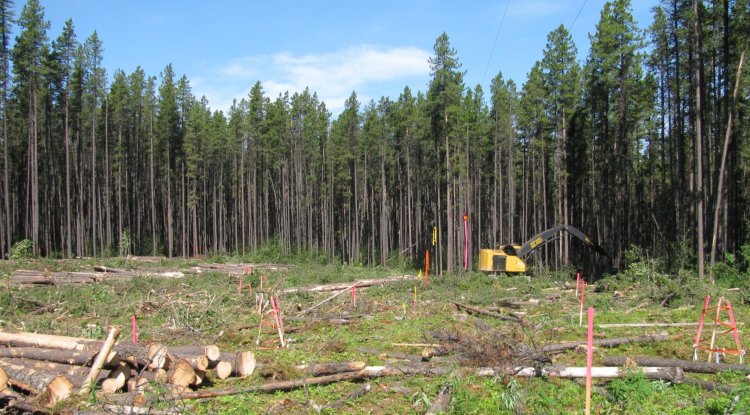
An extensive international study has shown that it may take up to several decades, and in certain cases even more than a century, for biodiversity in boreal forests to recover after deforestation by clear-cutting. The results have been obtained using the method of meta-analysis of 190 datasets gathered in boreal and hemi-boreal forests of North America, Europe, and Russia.
The scientists studied the similarity between the communities of plants, animals, and fungi in the forests that underwent harvesting and the ones in pristine forests. Even though there were communities that had restored themselves within 30 years, many species had not yet recovered or needed much more time to reach the initial level. Bryophytes recovered in conifer forests only after more than 100 years, while the recovery of lichens took about 95 years, vascular plants 85 years, and small mammals more than 55 years. Saproxylic beetles, which are wood-dependent species, did not show any signs of recovery within the period covered by the data.
What is a boreal forest?
The boreal forest, or taiga, covers areas in the north of Canada, the US, Scandinavia, and Russia. It is one of the biggest forest ecosystems in the world, holding much carbon and serving as habitat for birds, mammals, insects, fungi, and plants. It is also an important source of lumber.
Why is it taking such a long time to recover?
Clear-cut logging means cutting down almost all trees in a single operation, thus altering habitat structure, soil characteristics, and dead wood amount, which serve as food sources for certain species. While new trees can be grown within several decades, it has been proven that it takes more time to restore the original variety of species because different organisms recover at different speeds.
The recent study has also revealed that the forest-dwelling birds tend to decrease activity in intensively clear-cut zones.
Why is this research important?
According to the researchers, the results of their study demonstrate that forest regrowth cannot be evaluated merely based on the growth of trees. Biodiversity restoration takes much longer, and the time periods may vary greatly depending on various species. They claim that these differences need to be taken into consideration when managing forests.
What's Your Reaction?