Delhi has added 300 new electric buses, taking its e-bus fleet to around 4,800 as the city strengthens clean public transport and supports India's electric mobility goals.
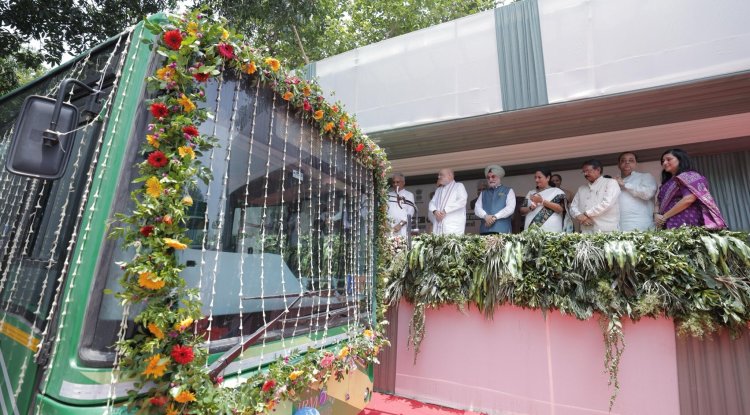
Delhi has expanded its green public transport network with the addition of 300 new electric buses, taking the total number of electric buses operating in the national capital to around 4,800. The new buses were flagged off on Tuesday by Union Home Minister Amit Shah in the presence of Union Environment Minister Bhupender Yadav and Delhi Chief Minister Rekha Gupta at Central Park in RK Puram.
Introduction of the electric buses is yet another move by the city authorities in their bid to improve the existing public transport facilities of the city by decreasing air pollution and greenhouse emissions from buses. These electric buses emit no pollutants at all as compared to the existing diesel buses.
Addressing the gathering, Chief Minister Rekha Gupta said Delhi now operates around 4,800 electric buses, making it home to India's largest electric public transport fleet. She said expanding the fleet reflects the government's commitment to cleaner, more accessible and sustainable mobility for residents.
The new buses will contribute significantly to improving the overall commute experience due to their improved comfort, efficiency, and reduced noise level. In addition, the new buses will provide improved connectivity in terms of connecting people to all areas of the city through improved accessibility to various parts of the city.
Union Minister of Home Affairs, Amit Shah stressed the need for clean mobility technology as part of India’s climate and environment initiatives. Launching of the buses is in line with India’s initiatives towards electric mobility and reducing its dependence on non-renewable sources of energy.
According to Union Environment Minister, Bhupender Yadav, an increase in the number of electric public transportation vehicles will help in reducing vehicle pollution. Union Home Minister Amit Shah stressed on the significance of clean mobility for achieving sustainable development objectives of India.
What commuters can expect
The introduction of 300 electric buses will ensure an improvement in the availability of buses in Delhi, which will contribute to improving the reach of public transportation by ensuring that more buses are available on various routes. This will result in reduced waiting times, better connectivity on routes, and better last-mile connectivity. It will also assist in meeting the increased demand for bus services among commuters in the city.
As opposed to diesel buses that have internal combustion engines, electric buses provide a relatively smooth ride due to the fact that the buses lack any kind of engines. The level of vibration and noise is relatively low in case of electric buses which provides passengers with more comfortable rides. Some of the new buses that have been acquired have a variety of facilities installed in them to provide comfort to the passengers including CCTV cameras and GPS systems.
While the city of Delhi is improving its electric public transportation system, the administration also hopes that clean and efficient buses will encourage more people to move from using their private vehicles to using public transportation. Such a change would not only decongest the roads but would save on fuel as well.
Environmental benefits beyond emissions
The growth in the number of electric buses in Delhi is anticipated to offer some environmental advantages apart from lowering greenhouse gas emissions. As a result of zero emissions from electric buses, they reduce the number of pollutants being released, such as particulate matter (PM2.5), nitrogen oxides (NOx) and carbon monoxide that form some of the key sources of air pollution in cities. This is helpful in ensuring clean air and better health for residents, especially the vulnerable groups of people, such as children and elderly ones.
An additional benefit of electric buses would be their ability to lower noise pollution. Electric buses tend to run quietly compared to buses that run on diesel fuel, thus ensuring a quiet urban setting, especially in congested parts of the city. Additionally, electric buses will decrease India’s dependence on fossil fuel, helping increase energy security.
The environmental effects of electric buses will only get better as the Indian grid becomes more dependent on renewable energy sources. As there will be more use of solar and wind power, cleaner energy will be used to charge electric buses, which means that the overall carbon footprint of the transportation industry will decrease.
Supporting India's electric mobility ambitions
The introduction of the new buses is also part of the Government of India's larger plan that seeks to fast-track the use of electric mobility by means of schemes like the PM E-Drive Scheme and others. The intention is to curb the emission of greenhouse gases in one of the rapidly growing industries in the country.
In addition, India has pledged itself to attain 500 GW of capacity for the generation of electricity from non-fossil fuels by 2030 and to become net zero emitter of carbon dioxide emissions by 2070. Making the public transport system electric is seen as one of the most crucial ways of meeting the above two pledges because buses have millions of commuters traveling through them each day, and an electric bus can replace several car rides and make a great impact on reducing emissions.
What's Your Reaction?