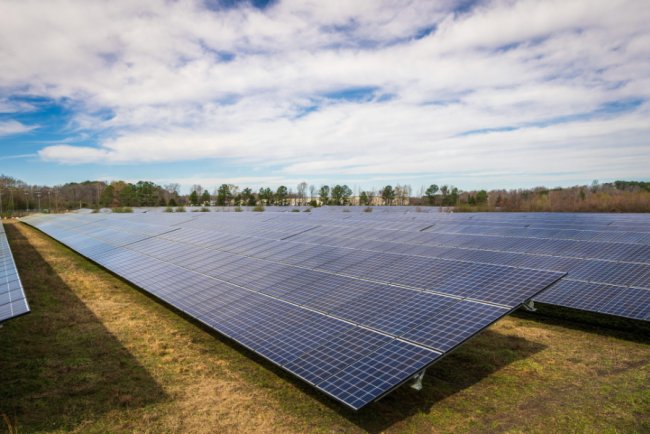
India’s accelerating green transition is driving demand for specialised talent across renewable energy, clean technology, and decarbonisation sectors as companies expand their sustainability efforts.

India's giant leap in building a sustainable economy is creating a business environment where there is a massive hiring spree, and the market for specialised human capital is becoming increasingly competitive. Internet of Things (IoT) companies are working to meet ambitious Net Zero targets and low-carbon benchmarks, while expanding renewable energy assets, resulting in a corresponding surge in demand for green talent. Due to this critical skill shortage, Indian companies are turning to a global search for talent to recruit skilled professionals who can drive their complex decarbonisation initiatives and advanced clean-tech manufacturing businesses.
This recruitment trend is evident across all sectors, with overall growth in sustainability-related job roles showing a 10 to 20 per cent increase in hiring over the course of the last year. However, specific areas such as high-tech solar production, grid-scale batteries, the EV ecosystem, and green hydrogen are experiencing a more significant increase in demand for talent. It is no longer simply a matter of filling entry-level jobs. As firms attempt to build strong organisational structures for their new sustainability divisions, recruitment experts say that more than a quarter of all available jobs in the green sector are currently targeted specifically at mid-senior management and executive leadership roles.
Major Indian companies such as ReNew, Larsen and Toubro, and Navitas Solar are following a dual-track employment strategy to build these specialised organisational structures. Established core activities like wind farm management, project automation, and asset maintenance are attracting skilled professionals from related domestic industries such as traditional power generation, oil and gas, and heavy chemical processing. However, in areas such as the manufacturing of next-generation solar cells, battery assembly, and large-scale electrolyser production, domestic human resources are not sufficient. To address this technological gap, Indian companies are actively seeking experts from well-established markets in the West, which are further advanced in the energy transition process, while also hiring Indian expatriates.
The global talent search for such leadership positions is highly competitive, with compensation packages reflecting the importance of these roles. Top executive search firms report that salaries for dedicated business unit heads and sustainability chiefs now begin at seventy-five lakh rupees per annum, while specialised technical officers and chief sustainability officers are routinely paid two point five crore rupees and above. The significant investment in these roles confirms an important reality among corporate executives: advanced technology alone is not enough without capable leadership to implement it effectively.
Domestic clean-tech manufacturing plants are scaling up significantly, contributing substantially to job growth. For example, Gujarat-based solar module manufacturers are creating thousands of jobs across factory operations and engineering roles while seeking to reduce material waste and streamline production processes. The industrial momentum is expected to increase further, with major market players predicting that upcoming green energy ecosystems could create up to two hundred thousand jobs across the wider supply chain. This large-scale transformation is changing the role of human resources from a cost centre into a source of business growth and competitive advantage.
At the same time, global consulting firms and technology companies are rapidly expanding their teams in India to respond to the growing demand from corporations for decarbonisation strategies. Companies such as Schneider Electric are recruiting heavily in areas such as digital energy management, carbon accounting, and efficiency engineering, which are increasingly data-driven fields. These companies are developing large talent bases in India to support local businesses in creating actionable and accurate carbon reduction pathways, including achieving a forty-five per cent reduction over the next decade.
In the final analysis, India's search for global talent highlights the fact that a successful green transition is ultimately also a human resource challenge. Securing multibillion-dollar investments and developing high-efficiency technologies are essential, but building a skilled workforce remains the key to long-term transformation. India is developing a strong knowledge ecosystem by combining the experience of domestic industry leaders with the expertise of global clean-tech innovators. While these talent pipelines are addressing current workforce gaps, they are also creating the next generation of leaders capable of taking the country towards its long-term goal of becoming Net Zero.
What's Your Reaction?