Maternal Mortality Ratio declined from 122 per 100,000 live births during 2015-17 to 87 during 2022-24, as per the SDG 2026 data
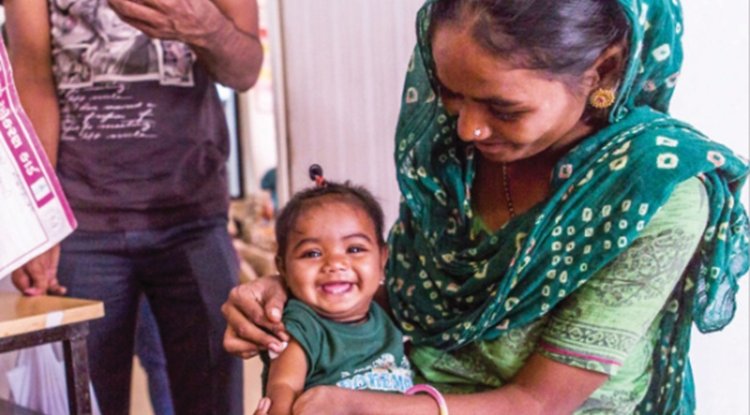
Many Indian families were quite concerned about having a baby in the 1990s. The Maternal Mortality Ratio (MMR), which measures how many women die giving birth, was extremely high. There were more than 400 fatalities for every 100,000 babies born, which means that many women are losing their lives when they should be content and expecting a new child. These days, medical and other programs have advanced significantly.
The Ministry of Statistics and Programme Implementation recently released a report that shows the MMR of India has gone down a lot. It is now 87 deaths for every 100,000 babies born, which is a big change from 122 deaths just a few years ago. The Maternal Mortality Ratio of India is getting better and better. This is a deal for the health of our country.
India's declining maternal mortality ratio indicates that many mothers are still alive and able to care for their children and families. India's maternal mortality ratio is crucial. In the past years, the things that are improving in a positive way. Due to improved maternity rates, thousands of mothers are now able to take care of their families, give their children hugs, and engage with their communities. With maternal mortality falling by about 4.9% a year, India is currently on the verge of meeting the UN Sustainable Development Goal of bringing MMR below 70 by 2030.
This is not an accident, and it did not happen only by handing out checks. For many years, the Indian government under the leadership of Prime Minister Narendra Modi has focused seriously on financial incentives to bring women into the formal healthcare network. While that helped, the real development came when the approach changed toward a "Continuum of Care."
Instead of handling birth as only a single medical event, the healthcare system began doctoring pregnancy, delivery, and the weeks after birth as one complete chain. With the approach than we can’t break any link in this chain to risk losing a life.
 With a bunch of targeted initiatives has gradually rebuilt the infrastructure of maternal care from the ground. The Surakshit Matritva Aashwasan (SUMAN) scheme principally ensures zero-cost, proper care at government healthcare facilities. Along with the Janani Shishu Suraksha Karyakram (JSSK), this scheme eliminates terrible medical debt by making deliveries, medicines, diagnostics, and transport entirely free. Therefore, as a result, institutional births have increased to over 88.6%. A decade-old initiative, the Pradhan Mantri Surakshit Matritva Abhiyaan provides free specialist check-ups on the 9th of every month. The main goal here is to survey and identify high-risk pregnancies, like women with severe anaemia or dangerous hypertension, before they reach the labor room. A beautiful clinic involves nothing if the delivery room is unsafe. The LaQshya program has quietly upgraded labour rooms and maternity OTs to global standards, targeting the two biggest killers of new mothers, postpartum haemorrhage, heavy bleeding and infection.
Programs like the POSHAN Abhiyaan and PM Matru Vandana Yojana provide a ?5,000 direct benefit transfer and try to fix the underlying problem of malnutrition and anaemia before a woman ever goes into labour.
While the national MMR of 87 is a major achievement, progress varies widely across states. Kerala tops with an MMR of 24, followed by Tamil Nadu at 25, Maharashtra at 37, and Andhra Pradesh at 39. Odisha, Assam, and Chhattisgarh have also shown rapid improvement.
The main challenge remains in outlier states. Uttar Pradesh’s MMR is still 154, nearly twice the national average, while slight increases in Jharkhand and Gujarat show that gains can quickly weaken if focus slips.
India is on track to meet its global target ahead of schedule, but the real success is that more pregnant women, especially in rural areas, can now expect safer, more dignified care.
What's Your Reaction?