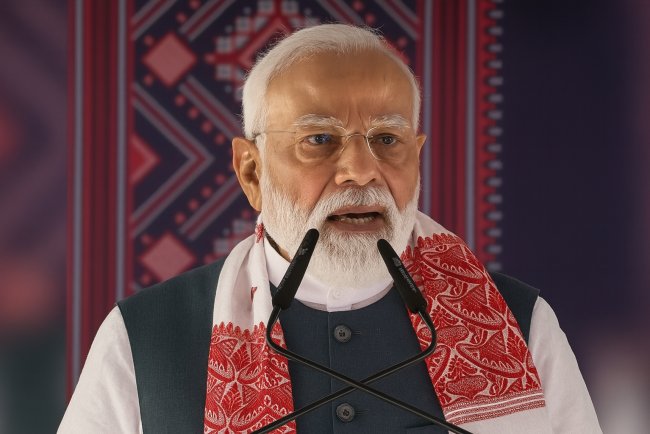
Prime Minister Narendra Modi shared a Sanskrit Subhashitam highlighting the importance of harmony with nature, sustainable development and environmental responsibility.

Prime Minister Narendra Modi on Sunday, shared a Sanskrit Subhashitam with the focus on the Indian philosophy of creating welfare of all living beings through balance and harmony with nature. The message highlighted the importance of culture values in conserving the environment and improving the welfare of people.
On the other social media X platform, the Prime Minister wrote about the values of the Indian society, and the close relationship with nature that has always existed has been a part of the country’s consciousness. In this context, India is continuing its efforts towards sustainable development and shared prosperity, he added.
The Prime Minister highlighted the concept of prosperity which is spread in all four directions, through awareness and mindful living while quoting Sanskrit verse. The verse is conveying a vision that we are continuing to interact with natural systems now without destroying it and for the good of all life.
The interpretation accompanying the message that development is not simply economic growth, but has to build environmental sustainability and quality of life. A message that is clearly hitting home at a time when global community is facing challenges such as climate change, biodiversity loss and environmental degradation.
The Prime Minister underscores the nation's broader commitment to sustainable development, addressing climate change, environmental conservation, and sustainable lifestyles, as seen in various national programs and initiatives related to renewable energy, conservation efforts, clean mobility and sustainable living.
Tracing back the thread of ancient wisdom, the Prime Minister described India's development as one that seeks inclusive growth while promoting a balanced relationship with nature.
The post received engagement on social media, where users shared their views on the message and its reference to traditional Indian philosophies in the context of present-day environmental challenges.
What's Your Reaction?