More than 25 lakh rooftop solar systems have been installed under the PM Surya Ghar scheme, with about 12.5 lakh households reporting zero electricity bills as India expands residential solar adoption.
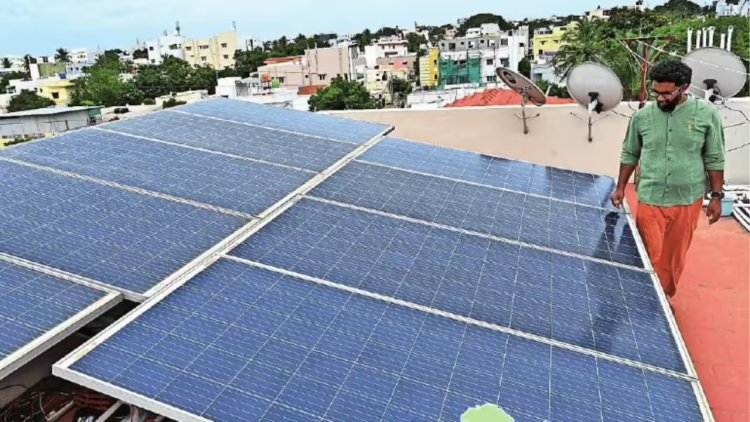
More than 25 lakh rooftop solar systems have been installed across India under the PM Surya Ghar: Muft Bijli Yojana initiative, with 12.5 lakh consumers enjoying zero electricity bills, as per information provided to Parliament.
Launched in 2024, the PM Surya Ghar: Muft Bijli Yojana is a scheme to boost rooftop solar installations across Indian residential areas through subsidies and an ease of application via a national portal. It is meant to enable electricity generation through rooftop solar systems while reducing dependency on conventional grid-based electricity.
According to government data, 25,02,217 rooftop solar systems have been installed across India till early March 2026 after receiving over 63 lakh applications through its national portal. Funding of over ₹14,500 crore has been utilised during FY26 so far, indicating an increase in demand for rooftop solar systems across Indian households.
It is a demand-driven initiative that allows residential consumers with grid-connected electricity connections to apply for rooftop solar systems. Financial assistance is provided to consumers by the central government to enable consumers to install rooftop solar systems.
It is stated that the expansion of solar systems is having an impact on household expenditure related to electricity. For instance, it is stated that 12.5 lakh households have shown zero expenditure related to electricity bills. This is an indication that the electricity generated through solar systems is more than the demand for electricity in households. In some cases, households use additional electricity generated through solar systems and pay less for it.
There is also a connection between rooftop solar schemes and global warming. It is stated that if solar systems were installed in one crore households, it would generate 1,000 billion units of electricity and reduce 720 million tonnes of carbon dioxide emissions over the life of solar systems for 25 years.
It is stated that in terms of implementation, states like Gujarat, Maharashtra, Uttar Pradesh, Kerala, and Rajasthan have shown promising outcomes in terms of installing solar systems in households compared to other states. These states have shown more potential in terms of rooftop solar systems and electricity costs in households.
It is stated that rooftop solar schemes have shown potential in terms of decentralising power generation and reducing pressure on electricity grids.
As installations continue to expand, the programme is expected to contribute to India’s wider renewable energy transition while reshaping how electricity is generated and consumed at the household level.
What's Your Reaction?