


The Atacama Desert in northern Chile, known as the driest place on Earth, experienced rare snowfall at ALMA Observatory for the first time in a decade. While the cause is still under review, climate models suggest such events may become more common. The snow event highlights shifting weather patterns in one of the world's most extreme environments.
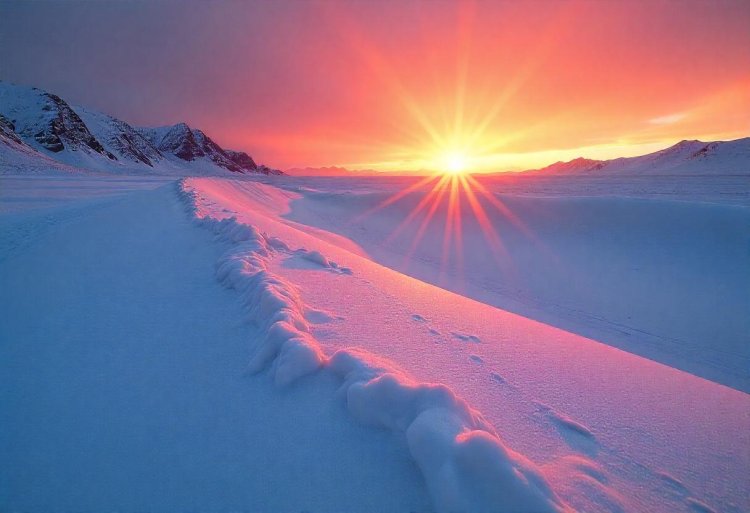
Some areas of the Atacama Desert in northern Chile, considered the driest place on earth, saw an extremely rare phenomenon on Thursday when it got covered with snow over its rocky surface. The unusual snow at low altitude was observed at the ALMA Observatory, which itself is located at an altitude of 2,900 metres above sea level. The event is the first in a decade that snow was reported at the principal complex of the observatory.
While snowfall is not rare above higher altitudes throughout the region, such as the Chajnantor Plateau at over 5,000 meters where ALMA's primary telescope is situated, lower altitudes receive no precipitation whatsoever. The phenomenon has been recorded since the Atacama Desert was already well-established as the world's driest spot.
Atacama Desert is in north Chile and along the coast of the Pacific Ocean. It is surrounded by Andes mountain and Chile Coastal Range. Due to its specific geographical position and prevailing atmospheric conditions, it can be probable that part of the desert goes years without any measurable rain. Its mean annual rainfall is commonly less than 1 millimetre, and therefore the location is one of the driest in our world.
The snowfall occurrence was captured in video and photographs by the ALMA Observatory staff and uploaded online via different social media platforms. The observatory, which is the Atacama Large Millimetre/submillimetre Array, is a cutting-edge astronomical facility built through collaboration between the European Southern Observatory, the United States National Radio Astronomy Observatory, and the National Astronomical Observatory of Japan. It has been considered the world's most powerful telescope and of immense worth to space exploration and research.
Researchers at Santiago University explained that although it is interesting that this snowfall episode occurred, it is too soon to ascertain if it has a direct relation with global warming. Nevertheless, existing climatic models have already concluded that such unusual climate phenomena as rain in highly arid regions such as Atacama will occur increasingly in the years to come. Researchers continue to monitor such abnormalities to witness long-term implications on the environment.
The Atacama Desert is also known for its cloudless blue sky and low humidity and hence the ideal site for viewing celestial bodies. It has also been home to some of the most advanced telescopes in the world in the past, and that in itself proves how much in favor it is with scientists across the globe. Snow at this level would have short-term implications on telescope usage and availability at the site but disruption has not been felt yet.
Snow in such arid areas is rare but not entirely out of the question. Snow also falls in upper parts of deserts from time to time, perhaps during winter or specific weather conditions. These events, being rare and sporadic, nonetheless provide valuable information for climatologists and researchers of desertification, weather conditions' unpredictability, and impacts of different atmospheric systems.
The event's timing is at the very moment of increasing global attention towards the effects of climate variability. There are continuous reports of unusual weather events like abnormal rain events happening in different ecosystems. Although there is no direct cause for Atacama snow, it is among the increasing evidence supporting regional weather patterns change.
ALMA Observatory also spotted previous snow higher up, although it is a rare event at its center. Staff have explained that such an event provides a telling insight into the regional climate and can guide subsequent site operations management. The observatory runs as usual, and the scientists carry on with planned operations as well as observing meteorological changes for research.
The white landscape briefly changed the desert's normally dry, red-and-brown landscape. Snow won't endure, though, with quick evaporation and intense daytime heat. But the event has created increased interest in climatic conditions in hyper-arid regions and has been an added stimulus for debate about possible environmental changes that are taking place in South America.
Snowfall at the Atacama Desert is a testament to the intricate workings of world climatic systems. Inasmuch as rare, such an event is a useful case study in the light of general implications from changes in weather patterns. The scientific community will continue to argue whether such a change falls within cyclical events or is related to anthropogenic activities in the climate.
The event also presents the regional scientific community and the global climatologists with a unique chance to observe the effect of such weather aberrations under extreme circumstances. Continuous observation by observatories and meteorological organizations will determine future occurrences and reasons behind such phenomena.
To date, the snow has not interrupted operations at the ALMA Observatory, and it is hoped that business as usual will resume. The event does lend an air of sophistication to the regional environmental story and does show something of the truth that even the most stable and desert-like ecosystems can be subject to change.
Source
AFP
What's Your Reaction?

















