The UAE's Zayed Sustainability Prize has installed six solar-powered health facilities in Karnataka, improving reliable healthcare access for more than 2 lakh people in remote communities
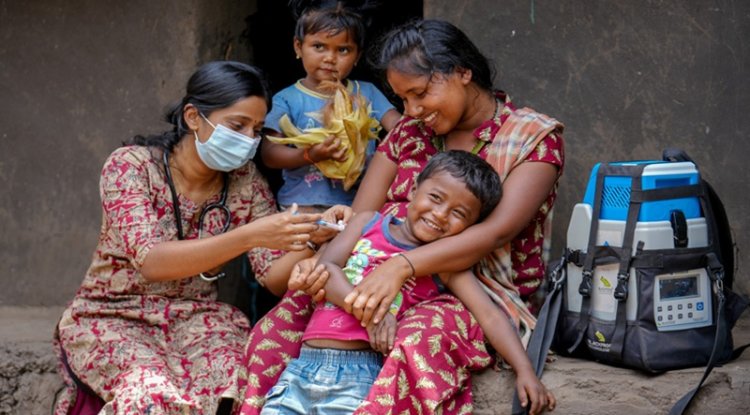
The UAE's Zayed Sustainability Prize announced the installation of solar-powered health facilities around India to increase over 200,000 people's access to dependable medical care. According to the firm, the deployment of six solar-powered health facilities with energy-efficient medical technology has been completed in Karnataka, southwest India. This will help patients to receive necessary medical care on time and closer to home rather than having to travel great distances to larger cities.
H.E. Ahmed Ali Al Sayegh, UAE Minister of Health and Prevention, said: “Through Beyond2020, the UAE continues to champion solutions that improve lives, strengthen resilience and advance global cooperation. The sustained impact of this deployment in India reflects our shared commitment to advancing sustainable development and expanding equitable access to essential healthcare services. Guided by Sheikh Zayed’s legacy of compassion and action, we remain dedicated to supporting communities and forging partnerships that deliver meaningful, lasting impact.”
Dr Harish Hande, CEO, SELCO Foundation, said: “Energy is a catalyst for better healthcare. By redesigning health facilities through solar innovation, we can make care both accessible and aspirational, bringing quality services even to the most remote communities. Our broader goal is to expand this model nationwide so that sustainable energy continues to drive improved health outcomes for those who need it most.”
India is running 30,000 primary healthcare centres and at least 1.5 lakh sub-centres across the country, most of them in remote villages, treating underprivileged people. As these centres mostly operate in remote areas, regular power cuts interrupt routine check-ups and the functioning of medical equipment. To run operations smoothly, centres need a source of reliable and clean energy, which can make a big difference for them. It can help these centres provide better healthcare, especially in places that are far from cities.
The solar-powered health facilities are equipped with solar photovoltaic systems capable of generating between two and 15 kilowatts of power under peak sunlight conditions. These installations are supported by off-grid solutions and lithium-ion battery banks that can store enough energy to provide 1.5 to two days of power.
These health centres also use simple, energy-saving medical equipment to improve patient care. They have portable baby warmers and phototherapy units to care for newborns. Doctors and nurses also use foetal monitors and assisted breathing devices when needed. Vaccines are carried in special boxes that keep them at the right temperature.
The centres also have digital tools such as stethoscopes, spirometers, digital microscopes and telemedicine systems. These help doctors check patients and even consult specialists without patients having to travel far.
To date, Beyond2020 has rolled out 19 deployments across energy, health, water and food-related solutions, transforming the lives of more than 429,800 people in Nepal, Tanzania, Uganda, Jordan, Egypt, Cambodia, Madagascar, Indonesia, Bangladesh, the Philippines, Rwanda, Peru, Lebanon, Sudan, Ethiopia, Vietnam, Malaysia, Costa Rica and India. Colombia has been identified as the location for the initiative’s 20th deployment.
What's Your Reaction?