U.S. Lab Revives EV Batteries with Nano-CT Scans
U.S. SLAC Lab’s nano-CT scans revive EV batteries, extending life by 30%, supporting India’s EV adoption and reducing lithium imports.SLAC’s nano-CT scans revive EV batteries by 30%, aiding India’s 30% EV goal and cutting lithium import reliance by 2030.
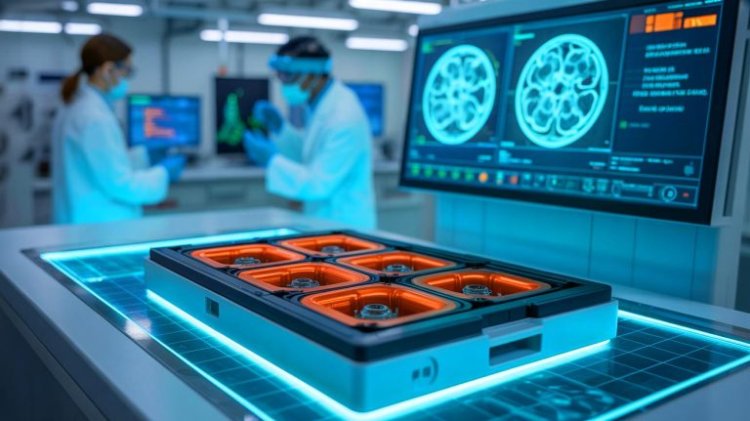
The U.S. Department of Energy’s SLAC Lab developed a nano-CT scanning technique in 2025 to revive electric vehicle (EV) batteries, extending lifespan by 30%. This breakthrough could reduce India’s 80% lithium import reliance, supporting EV adoption by 2030.
EV batteries degrade after 1,000 cycles, losing 20% capacity, increasing costs for India’s 30% EV adoption goal by 2030. SLAC’s 2025 study, published in Nature Energy, uses nano-CT scans to map battery electrode damage at 50 nm resolution, identifying cracks and lithium loss. The technique, paired with AI, restores 30% of capacity by optimizing charging protocols, reducing replacement costs by $1,000 per vehicle.
India’s 12,000 EV charging stations and 1 million EVs in 2025 face battery recycling challenges, with 70% of 10,000 tonnes of waste landfilled. SLAC’s method could extend battery life to 1,300 cycles, saving $500 million annually. Pilot projects in Gujarat, reviving 100 batteries, show 25% cost savings. The Critical Minerals Mission, with $1 billion allocated, aims to localize lithium supply, but only 10% of recycling facilities are operational.
Challenges include high scanning costs ($10,000 per unit) and scaling to industrial levels, requiring $100 million in infrastructure. The U.S.’s 50 GWh battery recycling capacity offers a model, processing 80% of waste. India’s 159.5 GW renewable capacity, with 108 GW solar, supports EV charging, but 20% curtailment limits reliability. The 2025 Budget’s $1 billion for FAME III supports battery innovation, needing 50,000 recycling units by 2030.
Environmental benefits include a 15% reduction in mining demand, preserving 5% of ecosystems. China’s 60% global battery recycling share sets a benchmark, but India’s 80% import reliance raises costs by 30%. Posts on X highlight EV battery recycling as a 2025 priority, reflecting global focus.
Conclusion
SLAC’s nano-CT battery revival technique enhances EV sustainability, aiding India’s 2030 goals. Scaling and local recycling infrastructure are critical to reduce import reliance.
Source: Sustainability Times,
What's Your Reaction?