A joint effort by the UP government and BAIF brings clean energy and jobs to villages through household biogas plants.
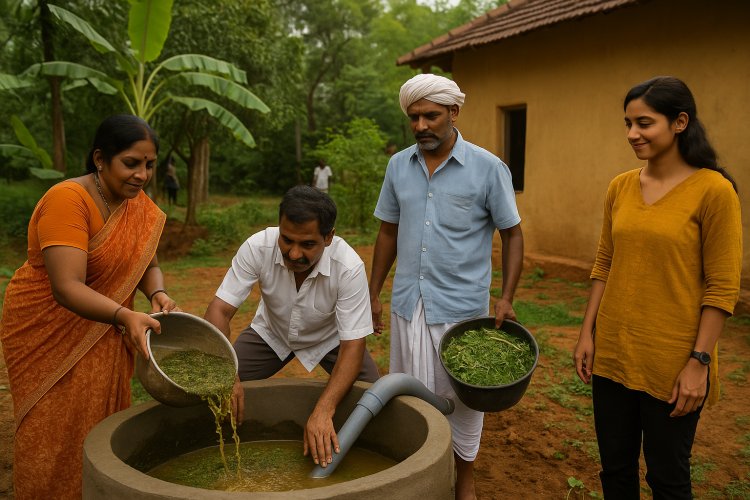
To promote clean energy and create jobs in rural Uttar Pradesh, the state government is starting a new plan to install domestic biogas plants in villages. These plants will help families use up to 70% less LPG and also make organic fertilizer from kitchen and animal waste. This will not only save money but also offer new job opportunities in the villages.
This initiative is a part of the Gram Urja Swavalamban Abhiyan, which seeks to establish rural homes as energy self-sustaining. The initiative is supported and coordinated by the Department of Rural Development, MNREGA, and Bhartiya Agro Industries Foundation (BAIF). Therefore, this initiative is a collaborative government and NGO effort to introduce clean energy and employment in rural India by establishing biogas systems in homes.
Each biogas plant will convert around 150–200 kg of waste every day into biogas, which can be used for cooking. The leftover material, called slurry, can be used by farmers as natural fertilizer. This creates a smart cycle that benefits both energy and farming.
In the pilot phase, more than 1,000 biogas units will be set up in districts like Barabanki, Rae Bareli, Amethi, and Sultanpur. The project will also provide jobs to local youth who will be trained to install, run, and look after the plants.
Gram Panchayats will help select which homes will get the biogas plants. The installation cost will be covered under MNREGA, and training will be given to households to use and maintain the system. A fixed design for the biogas plant has already been approved by the government.
Officials say the project could reduce the use of gas cylinders, cut cooking costs, improve village cleanliness, and lower harmful methane emissions caused by waste.
If this first phase works well, the project will be expanded across the state as part of the Rural Clean Energy Mission 2030.
Source: Times of India
What's Your Reaction?